
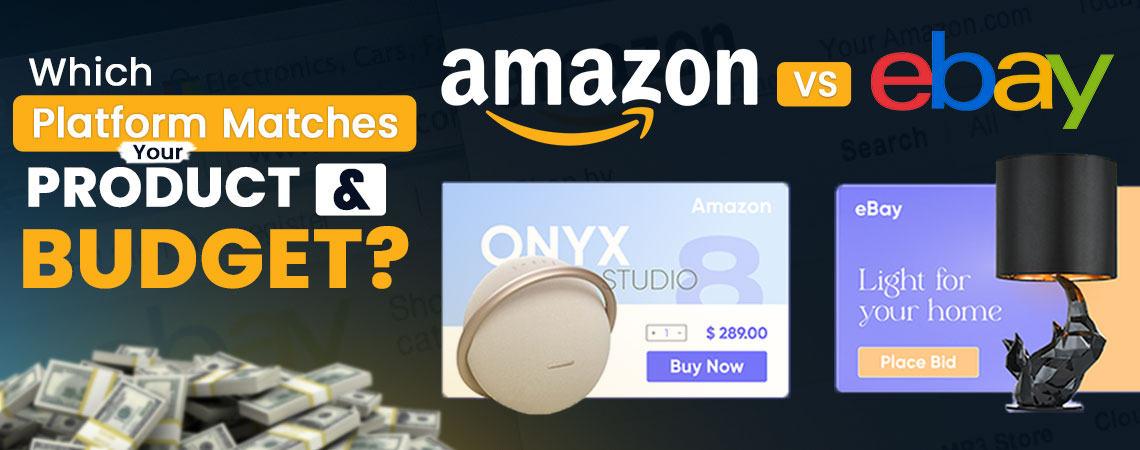
Starting an online ecommerce store, can't decide between Amazon & Ebay?
When starting an online business, most sellers pick a platform without understanding how it works. They look at YouTube success stories or something they see that's trending on TikTok, not realising the decision depends on the sources you have; one wrong step can drown everything. Choosing between selling on Amazon vs eBay isn't about picking the platform; it's about understanding where your product fits, how much you'll earn after fees, and how much effort you're willing to put in. Many new sellers jump in without checking the profit margin, but that one step can make or break the business. Every product has hidden costs, its packaging, returns, shipping time, or the platform's fee. If those aren't covered by what you're making, it doesn't matter how many orders you get. A successful e-commerce journey depends on matching your product, budget, and goals with the right selling platform.
 What are you selling?
Before choosing a platform, ask yourself what kind of product you have or want to sell.
What Works Well on Amazon:
The items that can be sold on Amazon are:
- Private Label Products: Custom, branded products sourced from suppliers.
- Bundled Items: Products grouped for convenience.
- Everyday Essentials: Kitchen tools, home organizers/décor, tech accessories.
- Health & Beauty: Supplements, skincare, grooming tools (sellers require approval for this category).
- Books, Educational Kits, Stationery: Novels, activity books, writers (sellers who want to target parents and students).
What Works on eBay:
You don't need fancy packaging or a brand; you just need something someone wants to buy.
- Used and vintage products, which include fashion, collectibles, electronics, and décor items.
- Refurbished tech like phones, laptops, Airbuds, or any accessories or gadgets from trusted sellers.
- Overstock inventory, this option can be used by resellers.
- Limited edition items like sneakers, watches, and memorabilia.
Startup Cost for Amazon and eBay
Amazon:
It can be started from $1500 to $3000, depending on your budget. The following is the idea of the cost to start:
- Monthly seller fee, which is $39.99/month if you want to go with a professional account.
- Inventory, which is purchased in bulk (depending on your product and supplier).
- FBA (Fulfillment by Amazon) shipping and packaging cost (depends on the storage space that's been occupied by the products).
- Budget for product photography, PPC services, and SEO.
eBay:
On eBay, you need $0 to $200 to start, depending on the products.
- Free to list up to 250 items.
- Pay selling fees only when you sell.
- No branding or bulk buying required.
- You can start reselling things from your home that are no longer in use.
Fulfillment of eBay & Amazon
Amazon (FBA):
- You send inventory to Amazon's warehouse.
- They handle packing, delivery, returns, and customer service.
- Scalable, but requires planning and system setup.
eBay:
- You ship it yourself by using third party services.
- Directly handle buyer messages and feedback.
- Scaling is flexible.
Buyers Mindset on Platforms
Buyers on Amazon:
- They want speed and convenience.
- Buyers trust Amazon's system and reviews.
- They are buying for utility or necessity.
- Buyers prefer professional brands and listings.
Buyers on eBay:
- They are bargain hunters; they love deals, auctions, and negotiation.
- Look for discounts, rare, or secondhand items.
- Shoppers want to chat with sellers to ask for discounts or to get a better deal.
Search Performance on eBay & Amazon
Amazon:
- Amazon has a strong search engine inside the platform.
- Sales depend on how you use keywords, product images, have good reviews, and run PPC ads.
- Once your products are ranked, you'll get more traffic.
eBay:
- Listings are shown on eBay and Google and using the best free Amazon to eBay lister can streamline cross-platform visibility without needing separate setups.
- You can boost visibility by running sales, offering free shipping, or promoting listings.
- Detailed titles matter more than SEO tools.
Growth Potential of Amz
Amazon is for building a brand. It allows you to scale, outsource, and create an asset you can sell as Amazon businesses can be acquired.
eBay is for reselling and learning. You'll get quick cash flow, experience, and learn how e-commerce works if you're testing products or looking to fund a bigger goal.
Benefits of Selling on Amazon
This is a good fit for sellers who have private label brands, want long-term scalability.
- Amazon gives exposure is for local and international buyers. Buyers trust the platform, so there are more chances of sales (if your product has reviews).
- Fulfillment by Amazon lets sellers ship their inventory to Amazon, and they handle delivery, customer service, and returns. It's perfect if you don't want to pack boxes yourself.
- Buyers pay premium prices on Amazon because of Prime delivery, brand trust, and convenience.
- Once your product ranks good, the algorithm does a lot of the marketing for you.
Drawbacks of Selling on Amazon
- If the product isn't differentiated, it'll get drowned. Launching without a strategy leads to wasted inventory and ad spend.
- Unless you enroll in Brand Registry (which requires a trademark), hijackers can list your product under their own listing.
- Need high investment. Between FBA fees, PPC ads, inventory, and software tools, Amazon can be expensive upfront.
- Amazon's algorithm can flag your account for minor issues, and the account gets suspended.
Benefits of Selling on eBay
- eBay is for resellers, vintage/used items, unique, and small budget sellers.
- You can start selling with zero inventory by selling what's in your house. No barcodes, no trademarks, no warehouse.
- eBay has a low entry barrier, no expensive FBA fees. You can fulfill your own orders and keep it small.
- You can sell used, rare items, also used to sell vintage items, used electronics, discontinued products, and collectibles.
- You get to talk to your customers, negotiate, offer discounts, and build relationships.
Drawbacks of Selling on eBay
- If you want to build a long term brand with loyal customers, eBay won't help much.
- People come to eBay looking for deals and discounts. Profit margins are lower unless you find a great sourcing supplier.
- Sellers pack and ship orders, manage listings, and deal with customers directly.
- You can make a side income or a full time income, but it's rare to build a seven figure brand on only eBay.
What New Sellers Don't Realize
You don't have to pick one platform and stick to it forever. Many successful sellers start on eBay to learn selling, get a market idea, and understand customer demands. Then move to Amazon once they're ready to scale a private label product.
Use eBay to Fund an Amazon Business
Start small on eBay with secondhand goods or wholesale. Use the profit to build your private label brand for Amazon. This strategy lowers risk, and you can get some skills while using eBay.
Amazon Takes Time
A good product, effective branding, positive reviews, and PPC management are key. Launching unprepared leads to money lost in ads or dead inventory.
eBay Buyers Are More Forgiving
Because you speak to them directly, they'll negotiate or message you. Amazon handles this for you, but also penalizes mistakes harshly.
Platform Rules
Amazon's seller policies are strict. A few negative reviews or policy violations can result in the suspension of your account. eBay is flexible; if the account is suspended, you need to contact them, and they'll need documents. If done right, it can be back on working.
Checklist For Sellers
| Questions | Platform |
|---|---|
| Want to sell your own brand products? | Amazon |
| Starting with low capital and wanting to learn fast? | eBay |
| More manual work (shipping, storage, customer service) | eBay |
| Want to scale and in the long term? | Amazon |
| Selling used or vintage items? | eBay |
Personal Experience As a New Seller
When I wanted to start selling online, I was very confused about choosing the platform. I had more motivation than money. I didn't have thousands to invest in branding or warehouses with inventory.
So, I started with eBay. I sold things around the house, then electronics that weren't in use, and random wholesale lots. eBay didn't care if I had a logo. It didn't need me to buy barcodes or send pallets to a fulfillment center. It gave me a sense of how e-commerce works with low risk.
My first sale was a secondhand tablet I fixed up and listed with product photos. But when I received a notification that you made a sale, I was shocked. From there, I kept reinvesting. I learned pricing, shipping, how customers think, and how to survive in a marketplace.
I saved the money, then planned to launch on Amazon with a proper plan, branded product, and systems.
How SpectrumBPO Helps Sellers to Grow
Once I moved to Amazon, I realized I wouldn't be able to do it alone. There were algorithms, ad campaigns, optimization strategies, and compliance issues. I knew the product, but I needed help with growth, and that's where e-commerce services stepped in. I got to know about them from one of my friends. From the very beginning, they helped me:
- Optimize listings that actually converted.
- Structure my Amazon PPC campaigns.
- Handle account health and avoid common suspension issues.
- Develop a long term growth strategy, not only short term sales.
That's when I discovered how helpful Amazon brand management solutions can be, from protecting your brand to boosting visibility; they've been key to scaling. I went from being a solo seller doing it all to building a system I could scale with confidence.
Share this Post




Blog Categories
Uncategorized
