

Selling on Amazon vs eBay: Where Should You List?
You're planning to be in the e-commerce market, but you aren't sure where to start. There are so many e-commerce platforms like Shopify, Walmart, Etsy, TikTok Seller Central, Sellfy, and many more. As there are so many choices, you need to choose smartly to place your feet on the safe side. With different advantages for sellers, these platforms rank among the most strong online markets in the world.
While choosing the platform between Amazon and eBay, keep in mind the factors that can impact it, which are your profit margins, operational workload, and sales potential. To build an e-commerce business that's sustainable, you need to know the benefits and distinctions of these platforms, whether you're an established seller trying to grow, a side hustler, or a new seller who is in the process of developing their brand.
 Insights from Selling on Amazon vs eBay
- Understand the differences when you choose to sell on Amazon vs eBay, from fees, marketing strategies, buyer experiences, to fulfillment models.
- Get an idea about the platform that suits your selling style and business goals well, whether you want to do the operation yourself or want to get them done automatically.
- Get a clear picture of how each marketplace handles order fulfillment, storage, and customer service.
- Compare fee structures in detail so you can calculate your profit margins before you plan to land in the market and commit to selling your products.
- See how advertising strategies are different on these two platforms and which one is best according to your budget.
- Real seller experiences to better understand the advantages and drawbacks of both Amazon and eBay.
- Find out which platform gives more control over listings, pricing, and customer service.
- Get full service ecommerce agency to choose smartly when you're planning on expanding to multiple platforms or to get more sales.
Smart Approach for New and Existing Sellers
This is to help new and established sellers who are deciding between two of the most trending e-commerce platforms: Amazon and eBay. Starting an online ecommerce store, can't decide between Amazon & Ebay? With so many different marketplace options available in the digital world, many people who want to start their e-commerce business often feel confused about where to start. This is to help you make your decision easier by laying out the main differences between the two platforms. The key elements are how these platforms work, their fee structures, advertising strategies, and buyers' behaviour. This is to empower new and existing sellers to start and expand their e-commerce platforms confidently, and to give them an idea that if they prefer more control and low fees, or are looking for automation and scale so they can choose the platform accordingly.
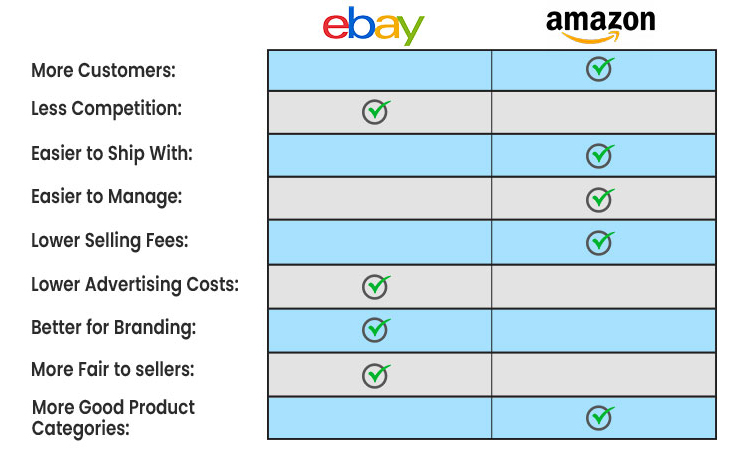
Comparison of Amazon and eBay - Which One Is Better for You?
| Feature | Amazon | eBay |
|---|---|---|
| Customer Base | Amazon has a large number of buyers all over the world who prefer fast delivery and branded products. Buyers trust Amazon for day-to-day items. | eBay attracts buyers who are looking for deals, used items. It also gives you an option to bargain. |
| Product Type | Best for selling new, branded items that are in high demand, like electronics, home goods, or clothing. Amazon doesn't allow used items unless you're approved. | This marketplace is best for new, used, refurbished, or vintage products. This platform is good for sellers offering secondhand products or unique finds. |
| Order Fulfillment | You can use the FBA model (Fulfilled by Amazon), where Amazon takes responsibility for packing and shipping your products. It is also in charge of returns, making things easier, but at a cost, or FBM, where the seller is responsible for everything, from storing to delivering. | Sellers ship orders themselves, giving you more control, but it comes with more responsibility. |
| Fees | Amazon charges higher fees, especially when you use their FBA model. These include referral fees, fulfillment fees, and subscription charges (for Pro accounts). | eBay's fees are lower. You have to pay to list, and a percentage is taken by eBay when you sell an item. It is best for small-scale or side-hustle sellers. |
| Seller Control | Amazon has strict rules and limits how much control you can have over your listings. They prioritize customer experience and can suspend a seller's account for any problem reported by buyers. | eBay gives sellers more liberty; you can customize your listings, write your policies, and adjust pricing or shipping however you want. |
| Visibilty | Amazon uses algorithms in which a buy-box is given to sellers who offer fast shipping, have good reviews, and good pricing. It becomes harder to rank as a new seller if certain criteria are not fulfilled. | On eBay, good photos, competitive pricing, and unique listings help you get noticed. It's more flexible and easier to start getting views. People running from compliance issues related to Amazon Pending orders may also choose eBay as a second option. |
Choosing the Right Platform for Your Selling Style
Everyone has their own working style, and not every platform accepts every pattern. No matter if you're a side hustler, new seller, or looking to scale your already existing business, choosing a marketplace that sits well with your company's style can make a huge difference.
Amazon
Amazon is best for those who are more data-driven, have a scalable business plan, and prefer an automatic pattern. Sellers who want to deal with a large inventory can use the Amazon FBA model, in which Amazon will take care of all the operational tasks, storage of products, once the order is received, the packing, dispatching, and even the returns are managed by them. Both new and experienced sellers can benefit from this by managing a sizable inventory and focusing on growing their businesses. The sellers will have to follow the strict rules and will have no control over their branding.
I used Amazon's FBA model to list a private label kitchen tool. It was easy at the start because Amazon handled the storage and delivery, but because of the competition, I had to deal with a problem where my product was suppressed under the top sellers' listing. To fix this, I spent time researching keywords and got to know how long can amazon backend keywords be, also on improving my product images, and signing up for Amazon's advertising program. After putting those strategies into practice, I began to appear on the first page of search results and had good traffic. I learned from the experience that Amazon gives preference to the Buy Box to sellers who optimize their listings and follow the rules.
eBay
eBay gives sellers the option they sell new, unique, used, or vintage items. This platform lets you operate your business as you want. Buyers can offer a price, and sellers can accept or reject it, or they can offer the price they want to sell it at (not the listed price, but something that falls within the customer's range and gives sellers a profit margin as well). Delivery of the product is the seller's responsibility; you handle your own shipping and customer service, where you have more flexibility and can achieve high profit margins because of to less fees.
It was easy to list products on eBay; I was able to set my shipping method. The challenge I faced as a new seller was less visibility on new listings. I realized that without reviews or a good rating, it's hard to build trust. To solve this, I focused on fast shipping, communication with buyers, and excellent packaging. I also added a thank-you note for them. Within a few weeks, I had 5-star reviews where customers appreciated the effort. It improved my listing performance and helped me get more sales.
Buyers Experience
Amazon
Convenience on Amazon matters for buyers. Because most of them want to have a fast delivery service, especially people who have a subscription and are Prime members. As Amazon takes care of the operation, there is no direct communication between sellers and buyers.
Buyers trust Amazon's return policy and expect products to arrive as they are described in the description, with good packaging and quality. So, sellers have to do correct listings and keep good control checks on their inventory when they are using FBA. The best way is to get Amazon FBA management service, which will help you grow faster by fixing the problems in your listing and by managing your end-to-end operations.
eBay
When buyers are shopping for a used or a vintage item, they are more worried about the price and details of the product. As eBay gives an option to bid and negotiate for the product's price, many buyers take it as an advantage and use this option. Experience on eBay feels great, with customers getting honest, detailed product descriptions and quick responses to inquiries.
Shipping times depend on the seller's location and the shipping method they choose. Sellers should have clear communication to avoid negative reviews. A big part of trust between seller and buyer is built when the seller interacts and has positive reviews.
Fee Comparison
Getting to know the fee structure for both platforms is very important to calculate your exact profit margins. While both Amazon and eBay charge for selling, they do so in very different ways. Here's a breakdown of Amazon vs eBay fees:
eBay
There are two types of fees: you have to pay to sell on eBay.
Insertion Fee: This fee is charged when you list an item. eBay gives 250 free listings per month to every seller. If you do more than 250, you'll have to pay $0.35 per listing. But, if you have an eBay store, there are more chances that you can get more free listing allowance.
Final Value Fee: Once you sell an item, a final value fee is charged. This is a percentage of the total sale amount, per-order fee. The total sale amount includes the item price, shipping charges collected from the buyer, handling fees, sales tax, and any other applicable charges. You don't need to pay any third-party payment processing fees, as they're already included in this final value fee.
- For orders $10.00 or less, the per-order fee is $0.30
- For orders over $10.00, the per-order fee is $0.40
Optional listing upgrade fees: These are optional fees, but they can help your product stand out. You'll have to pay extra if you choose bold titles, subtitles, add a reserve price, or place your listing in multiple categories. These costs can add up directly, especially if you're trying to boost visibility in competitive categories.
For example, if you list a fixed-price item in the Baby category at $22.95, eBay's fees would total approximately $3.44. And if you choose to offer free shipping, that cost would come out of your profits, too.
eBay also charges additional fees for international sales, currency conversion, or if your account falls below standard performance levels, so it's important to maintain a good seller rating. You can always estimate your potential fees using eBay's fee calculator.
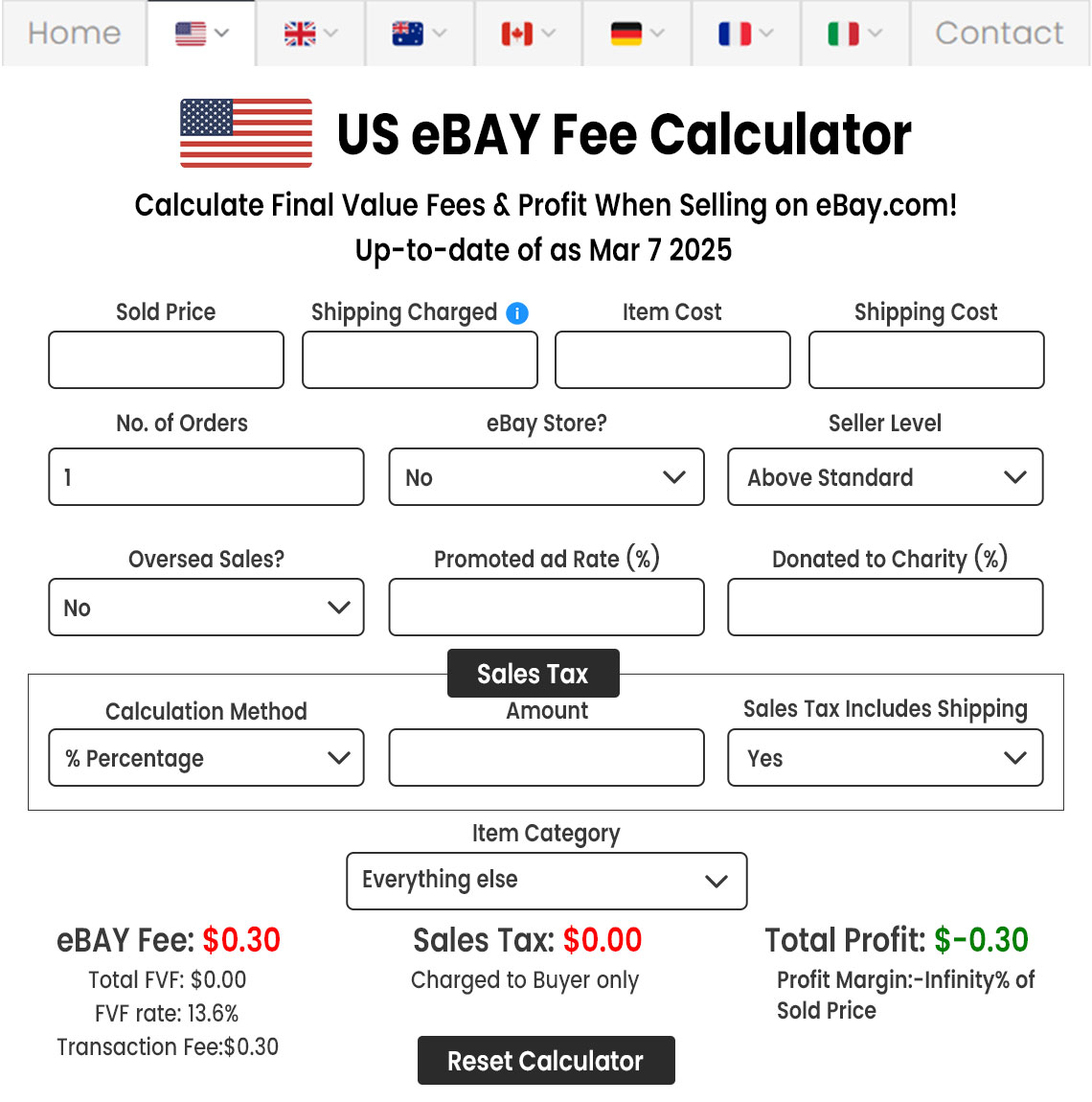

Overall, eBay's fee system is relatively transparent and can be more cost-effective than Amazon's.
Amazon
Amazon's fee system is higher than eBay's, but it offers so many services, especially when you use the Fulfillment by Amazon (FBA) model. Here's a breakdown of what fees to expect:
Referral Fees: Amazon charges a referral fee on each sale, which is a percentage of the total sale. This fee differs by category.
Individual vs Professional Account Fees: There are two main types of Amazon seller accounts:
Individual Plan: No monthly fee, but you are being charged $0.99 per item sold. This is best for new sellers who are listing fewer than 40 items per month.
Professional Plan: Sellers need to pay $39.99/month, no per-item fee. This plan is best for established sellers planning to move higher volumes and access advanced tools from Amazon.
- Fulfillment Fees: If you use the Fulfillment by Amazon (FBA) model, you'll have to pay additional fees for:
- Fulfillment Fees: As the orders are fulfilled by Amazon. These are charged per unit and depend on the item's size and weight.
- Storage Fees: As the sellers use the warehouse to store their products, they have to pay monthly charges based on the space their products occupy in the warehouse. Extra charges are applied for items stored over 180 days. To avoid this, keep good track of your inventory management.
Fulfilled by Merchant (FBM) Fees: If you handle storage and shipping yourself (FBM), you won't pay fulfillment or storage fees. However, you'll still be charged:
- Referral Fees or $0.99 per item if using the Individual Plan
Advertisement Strategies
Here's a quick look at the Amazon eBay comparison for advertising strategies.
Amazon
- Sponsored Products: These are ads for individual products that appear in search results and product pages. Pay-per-click (PPC) option is used by many sellers to get more sales.
Best for: New sellers looking to get visibility fast and drive traffic to new listings. - Sponsored Brands: In this option, you can do this by banner-style ads, which help you promote your brand and multiple products together.
Best for: Established sellers with Brand Registry who want to build recognition and drive multi-product sales. - Sponsored Display: This model helps sellers to target ads in a way that reaches buyers on and off Amazon, and it automatically reaches the people who viewed your product or a similar one.
Best for: Established sellers wanting to have potential buyers and get ahead of competitor pages. - Amazon DSP (Demand Side Platform): It delivers high-quality ads by maintaining privacy. This is done by using Amazon's first-party data and AI. It supports impactful, targeted, automated campaign management and transparent reporting, which is good for scaling business while protecting user privacy.
Best for: Large, established brands that have higher budgets and marketing teams. - Amazon Coupons & Deals (Lightning Deals, Prime Discounts): This factor allows sellers to have a promotion for a short time period, which helps them boost their product visibility, especially during events like Prime Day. In a lightning deal, a buyer can avail of only one offer, and then can benefit from Prime discounts.
Best for: Sellers who have inventory in bulk and good reviews who want to get more traffic and sales during peak periods. - Amazon Attribution: This is a free tool that tracks how your off-Amazon marketing works, like search, social, email, and influencer campaigns, and helps sellers to drive traffic and sales on Amazon. Through this, sellers can measure their ROI (Return on Investment) and optimize external strategies based on real conversion data.
Best for: Sellers who do external marketing and want to track performance accurately.
eBay
- Promoted Listings Standard: This is the easiest and best way for new sellers to advertise on eBay. You need to simply set a small ad fee (a percentage of your sale price), and eBay boosts your item in search results. You only pay if you sell an item from the ad. It's good for new sellers looking to test their products without a big budget. I have seen sellers get more visibility almost overnight just by setting a 5% to 7% ad rate on competitive products.
- Promoted Listings Advanced: This option gives you more control, just like Amazon's ads. You bid on keywords, pay per click, and fight for top search spots. It's more useful if you know your audience. This is great for established sellers who want to control search rankings for specific products. With the right keywords and good listing quality, your ad can reach to targeted audience and you can get more sales.
- Coupons & Discounts: eBay lets you create custom-made coupons like 10% off or 5% off your next order. This can be done directly on your listings. You can also offer automatic discounts like "Buy 2, get 10% off on your next order" to increase order value. Coupons make your listings stand out, especially in competitive categories. They build customer loyalty, customers do bulk buying, and even bring back repeat customers. I have seen sellers use coupons during slower weeks or for slow-moving products to spark quick sales without relying on ads.
- eBay Promotions Manager: This system on eBay is a built-in sales engine. It lets you give discounts, markdowns, sales, and offers. You can schedule promotions, add banners, and create urgency. It increases cart size, clears out slow-moving stock, and makes your store look active and competitive. Many sellers use it as "Amazon-style" deals and stay ahead during peak sales seasons.
Challenges Faced by Sellers When Starting Out
The main challenges that are faced by new sellers are choosing the right platform, fee structure, getting visibility for the listings of their products, and building trust with buyers by having good reviews on their store. It can be tough to handle everything from shipping to customer service without having any experience. Existing sellers may face issues like competition, changing platform policies, account suspensions, and difficulty in scaling up their business while maintaining quality. Both need to always learn new strategies and keep an eye on the updates, to stay competitive and meet customer expectations in a fast-moving e-commerce world.
Which Platform Should You Choose?
Based on personal experience and analysis, the best platform depends on what business goals you have. If you're a new seller, the best marketplace to sell is eBay because of its lower fees, flexible listing options, and buyer openness to newer sellers, even with no reviews. You can test your products with minimal cost and learn from it by selling online. If you're planning to scale and grow a brand with automated fulfillment, global reach, and stronger buying intent, Amazon is the best place to land, especially with FBA and advanced advertising tools. For established sellers, Amazon offers tools and exposure that can significantly increase their revenue, but sellers need to agree to the strict rules and handle the competition.
It is best if you start with eBay so you can have more flexibility, control, and lower startup costs. Then, slowly, you can move to or add Amazon as you scale and look for automation, a trusted buyer base, and brand growth opportunities. I see many successful sellers today operate on both platforms, getting eBay services and scaling them on Amazon. The key is to sell where your product fits best and where your workflow feels sustainable.
Ready to Sell Smarter
If you're planning to scale your e-commerce business, our team of experts can simplify the journey. From listing optimization, fulfillment assistance, inventory management on your eBay or Amazon seller account, and ads, we at SpectrumBPO handle the technical side so you can focus on what you do best: selling. Our team also has hands-on experience with Walmart Seller Central, so you're not limited to only these two marketplaces. Our team of experts will guide you with a customized strategy that can help you fulfill your goals within a good budget.
Ready to grow your business the smart way? Get in touch with SpectrumBPO today, let them manage your e-commerce accounts, which can help you get more organic traffic, and you can start selling with confidence.
Share this Post




Blog Categories
Uncategorized
