

Amazon Brand Gating: Expert Experience
Your brand is one of your most valuable assets, and on a competitive platform like Amazon, protecting it is very important. That's where brand gating on Amazon comes in. It's designed to help sellers keep control over who can sell their products by requiring resellers to provide proof, such as invoices and written permission from your brand, before they can list your items.
By this, you'll have fewer unauthorized sellers, less risk of fake products, more consistent pricing, and a great customer experience. For brand owners, this level of control doesn't just protect your reputation; it can also boost buyer trust and lead to more sustainable sales.
 Benefits of Brand Gating Amazon
- Risk of Negative Reviews: Unauthorized sellers displaying low-quality products lead to customer disappointment, which results in negative reviews that damage your overall listing performance. Brand gating helps minimize this risk.
- Buy Box Consistency: By limiting who can sell your products, you're more likely to win and keep the Buy Box, by which you can drive more organic traffic and sales.
- Less Time Spent on Seller Enforcement: Without brand gating, sellers need to report and remove unauthorized sellers manually; with gating, that enforcement is automated or avoided. It is effective when dealing with any gating item that repeatedly attracts unauthorized listings.
- Stronger Legal Standing: When you have brand gating combined with brand registry, it becomes easier to take legal or policy-based action against violators because Amazon already knows about your brand ownership.
- Supports Long-Term Brand Equity: Gating helps build a controlled presence on Amazon, reinforcing premium positioning and customer loyalty.
- Retail & Wholesale Partners: When your brand is protected online, retailers and authorized distributors are more likely to work with you, knowing they won't be undercut on Amazon.
How Brand Gating Protects Your Identity
When your brand is gated categories on Amazon, it means third-party sellers can't copy your listing and hijack it; this protection helps prevent Amazon listing hijacking. They're required to prove they have your permission. This stops unauthorized resellers from selling fake and underpriced versions of your product. It gives you more control, consistency, and fewer problems.
Amazon brand gating uses your product's ASIN (Amazon Standard Identification Number) to track and control listing access. If someone tries to list your item, they'll have to provide documentation of a manufacturer invoice, which should be dated within the last 90 days, and written approval from your brand permitting them to sell. Amazon charges them a non-refundable fee of $1,500, which goes directly to your brand.
Once you set it up, you don't need to monitor for listing hijackers or fake products. Gated brands on Amazon enjoy peace of mind because they know their brand image and pricing are safe. With brand gating on Amazon, you're not just reacting to problems; you're preventing them before they ever happen.
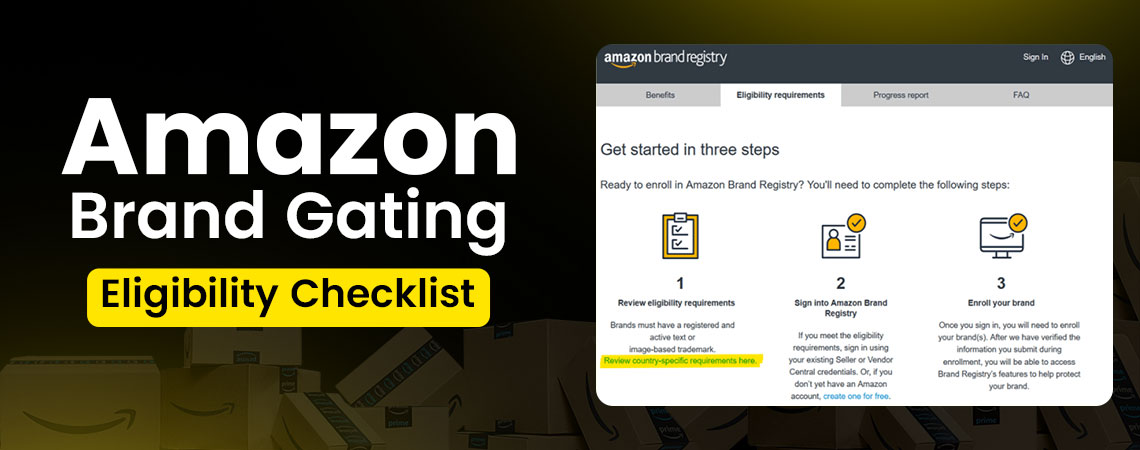
Eligibility for Amazon Brand Gating
To become eligible for Amazon gating, you need to meet specific criteria that show you are serious about brand protection and maintaining product integrity. Here's what you need to follow:
- Amazon Brand Registry
Your brand should be enrolled in the Amazon Brand Registry for gating. For this, you'll need a registered trademark, which can be text-based or image/logo-based. This trademark should be recognized by the intellectual property office, such as the USPTO (United States Patent and Trademark Office). If you don't have these, Amazon will not verify your ownership and doesn't offer advanced protection. Once you're verified, your brand is considered for Amazon Gated Brands, which offers an extra layer of seller control. - Professional Amazon Seller Account
You need to have a professional seller account that is active and has a good rating. The account should be in good health metrics and have a selling history with no policy violations. Amazon wants to see that your business is established and that you have trust among customers before giving access to brand gating features. - Amazon Product Listings
Your products should be listed correctly, with product titles, correct ASINs, and category placements. Incomplete and confused listings delay your eligibility. Many sellers choose to use Amazon listing services to make sure that their listings are optimized and match Amazon's standards. Well-maintained listings improve visibility and increase your chances of getting brand gating approved. - Evidence of Ongoing Amazon Brand Protection
Amazon looks for sellers who are taking steps to protect their brand. This includes sending warning letters, reporting fake sellers, and taking legal action when needed. Brands that show efforts to fight unauthorized sales get approved faster. If you've dealt with a gating issue in the past or frequently monitor your listings, it shows Amazon you are a serious seller interested in long-term placement in gated categories on Amazon.
How I Got My Brand Gated on the Amazon Ecommerce Platform
When I first started selling on Amazon, I had no idea how important brand gating would be until unauthorized sellers started showing up on my listings. There was a simple solution to how I could get ungated on Amazon, which I was unaware of. At first, I tried reporting them manually, but it was like a never-ending cycle. That's when I decided to take the long-term route and apply for brand gating. Here's how I did it:
- Got My Brand into Amazon Brand Registry
The first thing I did was to make sure my brand was officially registered. I had a trademark through the USPTO, so I applied for Amazon Brand Registry using my text-based mark. Within a few days, I was approved, and that gave me access to Report infringement and A+ Content. This gave me access to apply for brand gating Amazon protections. - Picked the Right ASINs to Gate
I planned not to gate all my product listings. I focused on the ASINs of items that were more in demand and frequently copied. I tracked which listings had the most issues with unauthorized sellers, and those became my priority list for Amazon gated products. - Collected all the Evidence
Before reaching out to Amazon, I wanted to show that I have been actively protecting my brand. I compiled all the warning emails I had sent, screenshots of fake listings, and reports I submitted through Brand Registry. I was also enrolled in Amazon Transparency, which helped strengthen my case. - Put Together a Solid Application
Here's what I included:- A short executive summary explaining why gating was necessary for my brand.
- A clear ASIN list with the titles and categories of the products I wanted gated.
- Screenshots of hijacked listings and fake sellers.
- A breakdown of my ongoing efforts to stop counterfeits.
- My direct contact details (email to which my seller account was linked and contact number), just in case they need more documents.
- Reached Out and did Follow Up
I didn't have a dedicated account representative. I submitted my request through Brand Registry support and followed up by opening a Seller Central case. I uploaded my documents and summarized everything clearly in the message. I checked in weekly just to make sure my case was still being reviewed.
The process took about six weeks. They asked for a little more clarification on a few ASINs. I responded quickly and kept everything organized. It wasn't an immediate process, but it worked. And now, third-party sellers can't list those ASINs without showing a valid invoice and written permission. There were times when I thought it might stand out (especially with one annoying gating issue where Amazon needed proof for a less obvious product), but persistence paid off.
I had a trademark, kept my listings clear by taking help from choosing best software for Amazon FBA warehouse management, and protected my brand actively. If you fall into this criteria, you can do this too. Now, with my ASINs protected, I don't have to waste hours chasing down fake sellers. By doing this, I was also able to get the customers' trust and sales back.

Common Challenges When Applying for Amazon Brand Gating
| Challenges | Solutions |
|---|---|
| Sellers rush the process and submit missing and inconsistent files. Amazon requires proof of ownership, ASIN relevance, and ongoing protection efforts. | Take your time to complete all the details. Include an executive summary, organized ASIN list, evidence of brand protection (like cease-and-desist letters), and contact details. If you're not sure of doing this yourself, consider getting help from the Amazon FBA agency to streamline the process. |
| If you haven't reported hijackers or counterfeiters before applying, Amazon doubts your need for gating. | Start building a protection trail. Use the Report Infringement in Brand Registry, keep records of fake sellers, and take screenshots. |
| New sellers request gating for products that aren't at high risk of fake activity or unauthorized reselling, just to get the record. | Focus on commonly copied products. This shows that you understand your catalog and are prioritizing your brand. The more risk is associated with an ASIN, the stronger your case for gated products on Amazon. |
| Incomplete listings raise concerns with Amazon about your overall brand management. | Make sure your listings are optimized and accurate. Hiring professionals or using Amazon listing services to format your titles, images, descriptions, and categories properly will help you. Well-crafted listings increase trust and approval chances. |
| Most sellers don't have an assigned Amazon representative, which can make the process slow or frustrating. | Submit your request through Brand Registry support and follow up using Seller Central case logs. Check in weekly. If delays continue, track your case using the contact forms available in Brand Registry. When you're trying to get a gating item approved, patience is the key. |
| Amazon's approval criteria aren't always public, and sometimes policies shift, and your first application might get rejected. | If this happens, request feedback on your rejection, improve weak areas, and resubmit with proper documentation. Sellers succeed on the second or third try. If you are not sure where you failed, reaching out to experienced sellers, agencies, or using an ungating service, Amazon can help you to get into trends through gated categories on Amazon. |
Secure Your Amazon Listings the Right Way
Getting your brand gated on Amazon isn't an overnight task, but it's worth the effort if you're serious about long-term success. It protects your products, builds trust with customers, and saves you time and stress in the long run. To make the process smoother, especially when dealing with listings, documentation, or follow-ups, SpectrumBPO offers support to Amazon sellers. Whether you're just starting or scaling your existing brand protection strategy, having the right partner can make all the difference.
Share this Post




Blog Categories
Uncategorized
