
Amazon Listing Hijacking
You're generating good sales since you put a lot of effort into creating your Amazon seller listing, choosing the best photographs, and writing quality content. Until everything changes one day. Sales slowly decline, and you notice negative reviews that aren't related to your product. That's when you realize, you may be dealing with Amazon listing hijacking, an issue where other sellers take advantage of your listing, sell fake or low-quality versions of your product, and ruin your reputation.
Sellers realize it when it's too late. Listing hijacking can destroy the reputation you've built with time, money, and effort. It's essential to monitor your listings and act quickly if you notice unauthorized sellers.
 Personal Experience of Hijacking I Faced
- BuyBox Loss
My Buy Box percentage began falling slightly. There weren't any new sellers on my ASIN, so I was surprised. I hadn't changed my price or shipping time, and my metrics were good. After digging in with Keepa, I saw my Buy Box was being shared at odd hours, early mornings, and late nights. Then I realized someone was manipulating the backend, submitting offers that temporarily undercut my opportunity to get the Buy Box to confuse the algorithm.
I started tracking Buy Box fluctuations daily using Keepa's alerts. I adjusted my pricing strategy to maintain competitiveness and planned to get Amazon listing specialists, which gave me better control of my listings. I also filed a case with Amazon support showing the pattern, and the hijacker was removed. - Review Patterns
One week, I received 5-star reviews from 8 buyers, then silence for days. Later, I got a 1-star review complaining about features my product didn't have, as mentioned on the listing. It looked like someone was using my listing with fake reviews to mess with my performance. That's when I got to know a hijacker was trying to tank my review profile to either take over or destroy my product image.
I used ReviewMeta to track unusual review patterns. Then, I opened a ticket with Amazon, citing review manipulation, and submitted a request through Amazon report counterfeit products. Amazon took action; those reviews were wiped, and the suspicious seller profile vanished. - Search Term
My impressions for two of my best-performing keywords dropped dramatically, but my organic ranking hadn't moved. It felt like I was invisible, even though I was still there. A hijacker had created a separate listing and was targeting my keywords, diverting search traffic through tactics. Their listing wasn't good, but it was pulling away my impressions.
I started checking my Search term report every week, looking at rankings, impressions, and clicks. I identified the competing ASIN and reported it for manipulation. I refreshed my listing to strengthen relevance. Implementing Amazon brand gating also became essential, as it helped limit unauthorized sellers from jumping on my listings and misusing my keywords. If you ever find yourself in a situation and wonder, can Amazon sell fake items, they try not to, but third-party hijackers can. - Listing Edits
A customer once emailed me asking why my bullet point mentioned something unrelated. When I checked, one line was changed. Another day, one of my high-quality images was swapped for a low-resolution version. A hijacker had gained contributor access and made stealth edits to confuse buyers and damage trust in the listing.
I locked my brand through Brand Registry and limited who could make changes. I started inspecting my top ASINs every morning; it takes a few minutes, but it prevents problems. Amazon product monitoring has become a daily routine for me, helping detect unauthorized edits or seller activity before real damage is done.
Remove Hijackers from Your Listing
Amazon is a competitive marketplace where sellers put in their effort and resources to build their brand reputation and customer trust. But hijackers can disrupt this progress by illegally attaching your product listing and selling counterfeit or unauthorized products. Understanding what is Amazon listing hijacking is important.
If you find yourself thinking about Amazon listing hijacking or notice suspicious sellers appearing on your product page, it's important to act quickly to protect your brand. Here are the steps on how you can do it.
- Identify the Hijacker
Before proceeding, confirm if it's a hijacker or a reseller. Sometimes third-party sellers are authorized distributors or resellers, which isn't a hijack. Hijacking involves sellers who list counterfeit products, confusing customers, and damaging your brand. Check for differences such as product quality, packaging, seller history, or fulfillment methods. If a seller's product differs from your authentic offering, it's a hijacker. Many sellers wonder how to tell if a Amazon seller is legit. Looking at reviews, seller ratings, and order fulfillment methods can give a better picture. - Amazon Brand Registry
One of the most effective ways to fight listing hijackers is by enrolling in the Amazon Brand Registry program, through which sellers get more control over their listings. Once registered, you can use Report a violation to notify Amazon about the unauthorized seller. The Brand Registry provides access to a proactive program that allows brands to directly remove counterfeit listings, authorising you to act quickly without waiting for Amazon's involvement. New sellers turn to full-service eCommerce solutions for beginners to handle tasks like brand protection, listing optimization, and brand development and management. If you suspect hijacking Amazon listing for your product, getting into these tools can be your strongest first step toward resolution. Learning how to stop on Amazon when unauthorized sellers appear can make all the difference in protecting your brand. - Report Counterfeit Products
If you are not part of Brand Registry, you can submit a complaint through the Amazon report counterfeit item page. This form allows you to provide detailed information about the counterfeit or hijacked product, including ASIN, seller details, and proof of violation. Providing real evidence, such as photos, batch numbers, or packaging comparisons, makes your case strong. Amazon reviews these submissions carefully and acts quickly to suspend or remove counterfeit listings. - Purchase the Counterfeit Product
To make your case strong, order the suspicious product from the hijacker's listing. By this, you'll be able to assess the quality and authenticity of the product. Document everything, take detailed photos and videos, and compare them with your actual product. This evidence will be helpful when raising your complaint with Amazon or considering legal options. If you have ever thought Amazon hijacked my listing, remember that the term sometimes refers to situations where counterfeit sellers exploit your listing. Collecting proof makes your claim stronger and gives you more chances to succeed. If the counterfeit product causes financial loss, filing an Amazon reimbursement claim can help recover some of the damages. - Contact the Hijacker and Legal Action
If you can identify the hijacker's contact information, sending a cease-and-desist letter should be the next step. This letter demands that the hijacker immediately stop selling counterfeit products and remove their listings. Some sellers obey quickly, some ignore the warning. For repeated issues, working with an intellectual property attorney to take legal action may be necessary. - Open a Support Case and Follow Up
In many cases, reporting the hijacker is not enough; you may need to open a case with Amazon Seller Support. Include all relevant documentation: your trademark registration, detailed descriptions, order receipts from the counterfeit product, and screenshots of the hijacked listing. Be persistent in following up. Amazon receives many complaints, so responding regularly and providing additional information helps keep your case prioritized.
Difference between Amazon Hijacker and Reseller:
Many new sellers ask what is hijacking and how they impact product listings. The term hijackers refers to unauthorized sellers who attach to your ASIN, selling counterfeit or inferior products under your brand name. With unknown hijackers, you need to deal smartly to report violations through Amazon Brand Registry or counterfeit reporting tools. Their actions can cause lasting harm to your brand's credibility and sales. With resellers, it's about managing pricing strategies and customer service to stay competitive.
How Can It Impact Your Brand Image?
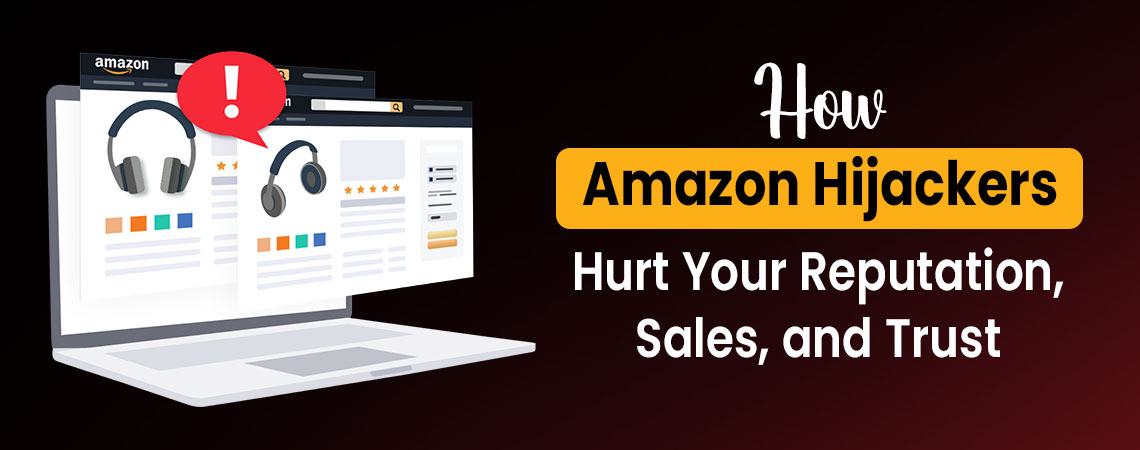
If someone is hijacking your Amazon listing, it can damage your brand image in these ways. Here's how:
- Breaks Customer Trust
When a hijacker sells counterfeit or low-quality versions of your product, customers may receive items that don't match the quality of your original brand. This can lead to:- Negative product reviews.
- Many Refund requests.
- Poor product seller ratings.
- Loss of Control Over Product Presentation
You lose control over product pictures, the hijackers change product images, titles, bullet points, or descriptions to suit their version of the product. This misrepresentation:- Confuses new & existing buyers.
- Ruins your true brand identity.
- Weakens the work you've done to build a professional product listing.
- Negative Feedback by Customers
Bad experiences caused by Product hijackers (e.g., late shipping, broken items, misleading packaging) result in negative product reviews for your listing. These reviews are visible to all customers, which damages your reputation. - Buy Box Hijack
If a hijacker wins the Buy Box by offering a lower price (often for a fake or cheaper alternative), customers are more likely to buy from them.- Reduces your product sales.
- Displaces your brand in the buying process.
- Creates a bad impression that your brand is unreliable or overpriced.
- Rankings and Ad Spend Impact
Poor reviews and listing inconsistencies can push your product down in Amazon's search results. You'll then have to spend on ads to get your visibility back, turning to Amazon advertising services to boost impressions and reclaim ranking, paying to recover from someone else's damage. - Legal and Reputation Risk
If a hijacker violates Amazon's terms or sends products that violate safety standards, you may be blamed. Your brand gets reported or suspended, even if you weren't directly at fault.
How Legit Sellers Suffer More Than Hijackers?
You might be thinking, if I am the genuine seller following Amazon's rules, building a real brand, why am I the one paying the price, not the hijacker, because it is how Amazon's system is designed:
- Listings
Amazon uses one unified product page per ASIN, which means that every seller shares the same listing. If a hijacker targets your listing and customers start leaving negative reviews, those reviews appear on the listing, not on the hijacker's account. So even if you had nothing to do with that poor product experience, your listing gets a bad reputation, and customers associate those issues with your brand. - Damage
Hijackers are selling cheap, unbranded, or even counterfeit products. They're not trying to build a long-term business; they're chasing quick profits. They:- Undercut your price.
- Ship low-quality products.
- Disappear once they get flagged or their account is suspended.
- Buyers Blame the Brand, Not the Seller
Most Amazon customers don't know how third-party selling works. They don't read the "Sold by XYZ". When something goes wrong, they think:
"This brand is fake or trash."
The system protects the listing, not the seller. So when the listing gets ruined, the one who's invested in it the most, you, suffers the consequences. That's why every legit seller needs to watch out for hijackers and act fast when they show up.
Building a Successful Amazon Brand
Dealing with Amazon listing hijacking is frustrating when you've poured your energy, time, money, and trust into building your brand. The sooner you spot the red flags and act, the better your chances of protecting your reputation and sustaining growth. To be on the safe side, it's best to partner with an ecommerce agency to manage brand protection, listing control, and compliance. Staying proactive is critical. With tools like Brand Registry, counterfeit reporting, and ongoing listing audits, sellers can take back control. Protecting your business isn't just about scaling, it's about survival.
Share this Post




Blog Categories
Uncategorized
