
7 Smart Ways to Protect Yourself from E-Commerce Scams
The E-commerce industry has seen a massive upsurge in recent times. People these days prefer to purchase whatever they want through online stores instead of taking out time and rushing through busy streets.
However, this ease has also brought some trouble for online shoppers. Scammers haven't spared this field as well to ruin their shopping experience. In fact, they come up with various tricks to deceive people and give them a financial setback.
Therefore, it's important for you to learn some ways that can help in preventing yourself from becoming a prey to e-commerce scams. We have brought this blog to introduce 7 such smart ways you can utilize before making a decision to purchase anything online.
So continue reading to learn about them:
 How to Protect Yourself from E-Commerce Scams?
1. Shop Only from Trusted Websites
E-commerce scams usually emerge from newly listed shops. Hence, you should try to shop only from the trusted websites.
Honestly, if you try out an untrusted platform, with a 'maybe' in mind, then the chances of getting scammed are very high. In fact, in this scenario, you cannot blame anyone except yourself.
In case you have come across an e-commerce store offering some unique products and you couldn't find that on any trusted website, then it's your responsibility to carefully examine the platform. Also, in such cases, opt for COD (Cash on Delivery) and pay only after confirming the received product is what you ordered and expected.
2. Verify Product Images
Fake online stores usually fetch product images from legit platforms and list them with a huge difference in price. As a result, when you make a purchase from such a store, you usually end up with a poor quality product that doesn't match with the one shown in the pictures.
Hence, to make sure the product photos aren't taken from another website, you must use an advanced reverse photo search tool. This web-based utility takes your image as a query and retries all similar and duplicate pictures posted online. Through its results, if you find the exact products listed on other platforms, then you should know that it's a scam.
3. Avoid Deals That Look Too Good to Be True
Many buyers get attracted to hefty discounts offered online. Buy 1 get 1 free, 70-80% off, and such unbelievable deals are too good to be true. It's not always that such offers are fake; but most of the time, they are just a way scammers utilize to grab customers' attention.
If you don't want to lose money, it's recommended to avoid such deals.
Why?
Because they usually result in delivering poor-quality products. The t-shirt you bought on such a big discount may not fit you in size or be made of low-quality fabric, which you might regret buying even at the discounted price.
4. Use Secure Payment Methods
The payment method you use can directly influence the outcome of whether you fall for a scam or avoid it.
Let me explain how.
For instance, if you use direct bank transfer, it may not ensure you of reporting the transaction in case there is dispute. On the other hand, credit cards prove to be a safer option, as they usually include stronger fraud protection policies.
Besides this, it's also important to avoid:
- Cryptocurrency payments to unknown sellers
- Payment requests through messaging apps
- Wire transfers for online purchases
You can also follow some additional safety tips, which include:
- Enable two-factor authentication on payment apps
- Avoid saving card details on unknown websites
- Use virtual cards when possible
- Monitor your bank statements regularly
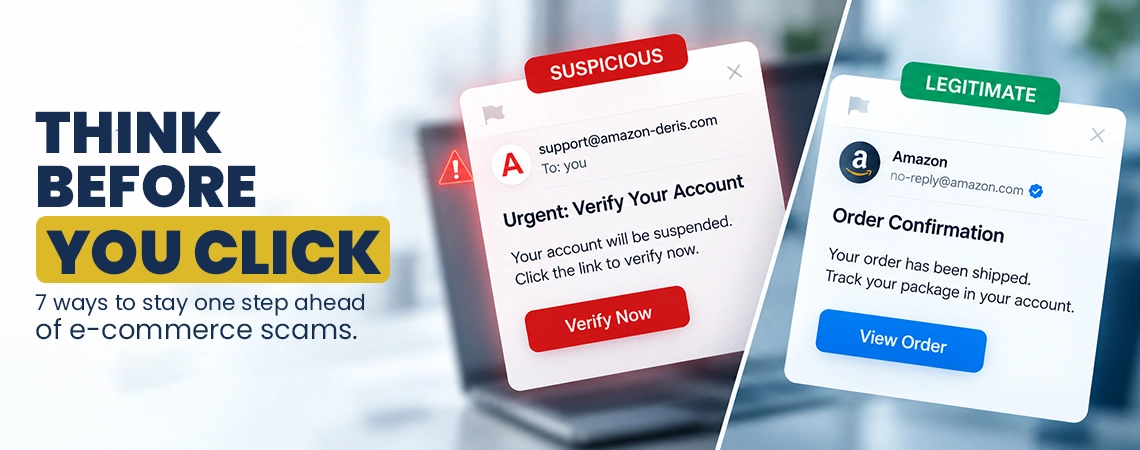
5. Be Careful with Phishing Emails and Fake Messages
Phishing is a common e-commerce scam that involves sending fake emails and messages to trap people. In this fraud, scammers target the buyer's sentiment by creating a sense of urgency with messages or emails, like:
- Your account will be terminated.
- Avail this gift card in under 10 minutes.
- Your package delivery has been delayed.
Such messages create confusion in the minds of buyers, and they end up clicking links that lead to data breach and other privacy issues.
So, what should you do?
Simply stop believing in such emails. The actual companies rarely send such notices; hence, if you really want to be sure, it's best to connect with their official customer support and get your issue resolved.
6. Check Seller Reviews and Ratings
Scrutinizing the reviews and ratings of an e-commerce platform is another smart way to prevent yourself from becoming a victim of a scam. Almost every e-commerce store has a section for testimonials that highlight how customers rate a certain product.
However, a 5-star rating from every buyer should be considered a red flag, as the seller might have added fake reviews.
You must also stay cautious in these cases:
- Reviews appear overly generic
- Ratings suddenly increase within a short period
- The seller has very few transactions
- Customers complain about scams or poor communication
7. Protect Your Personal Information
Some e-commerce scams may go beyond targeting your money. Several scammers are after fetching personal information about individuals to make them suffer on a bigger level. These details can include phone numbers, personal or office address, passwords, and bank-related information.
Thus, you must stay alert of such happenings, and be cautious while sharing any detail to purchase a product. While filling the purchase form, only enter the necessary info to complete the transaction; click back from the sites asking for excessive personal data that you think is unrelated to what you are buying.
What to Do If You Get Scammed?
If you suspect an e-commerce scam:
- Contact your bank immediately
- Change account passwords
- Report the seller or website
- Save screenshots and transaction records
- File a complaint with consumer protection authorities
Acting quickly increases the chances of recovering your money and preventing further misuse of your data.
Final Thoughts
In the last analysis, avoiding e-commerce scams is easily possible if online buyers follow the practical ways discussed above. The scammers cannot win in their goals if you don't blindly trust and buy anything that appears online. Hence, you must make sure to get the verification done before clicking the purchase button.
Share this Post




Blog Categories
Uncategorized
