
Do I need business license to sell on Amazon?
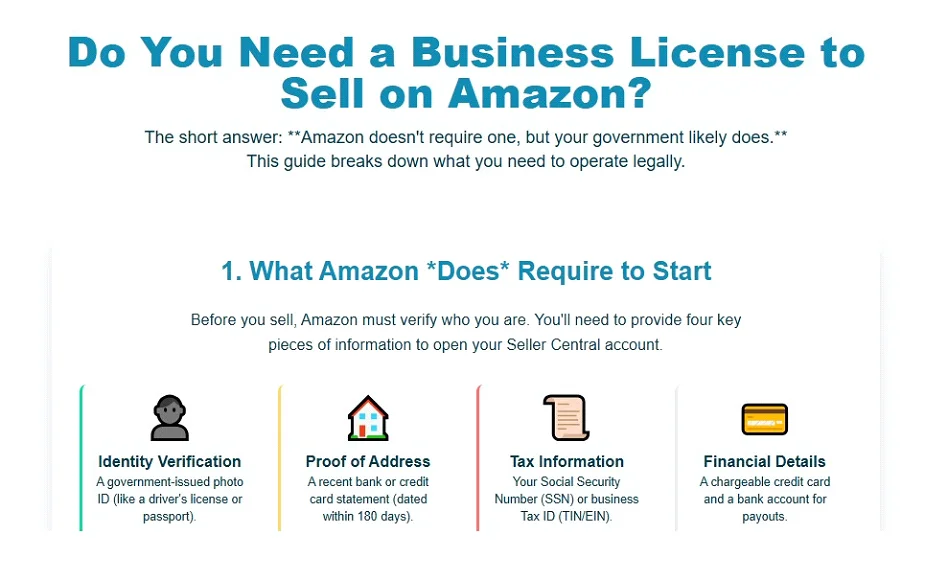
You can sell on Amazon without a business license under the Individual Plan, which lets you operate as a sole proprietorship. You don't need a business license specifically to sell on Amazon, but in many states, federal authorities require online sellers to have a license. Many sellers search for business license Amazon before they start selling on Amazon, it’s important to check the rules of your states you’ll work in so that your business is legally recognized. You need to provide documentation like business details, tax identification number (TIN or EIN), and state tax ID. By these, you can register a seller account on Amazon and start listing your products, which will bring you sales.
Selling on Amazon has become one of the fastest opportunities for entrepreneurs. With millions of daily transactions, the platform allows people to build profitable e-commerce stores without the need for a physical retail shop. Many people think of starting their Amazon store, but before getting started, one of the questions is: do I need a business license to sell on Amazon?
You can create an Amazon account with your personal information. For a license, it depends on your selling model. If you're using Fulfilled by Amazon (FBA) and want to build your own brand, you need a trademark, not specifically a business licence. That trademark must be registered under the right class type for your product category, whether that's clothing, electronics, or beauty. When setting up your seller account, knowing about the business license Amazon will help you determine if your category needs legal registration. For Fulfilled by Merchant (FBM) sellers, who pack and ship their own orders, they don't need a trademark. Statistics show that 86% of new sellers choose Amazon FBA as their starting model, and others go with FBM. The main reason is that FBA takes care of storage, packing, shipping, and customer service, which makes it easier to scale a business without worrying about logistics. FBA sellers get access to features such as Amazon Brand Registry, A+ Content, Sponsored Brand Ads, Vine reviews, and other tools that are not available to unregistered brands. These benefits make FBA attractive for entrepreneurs who want to build long-term, scalable private-label businesses.
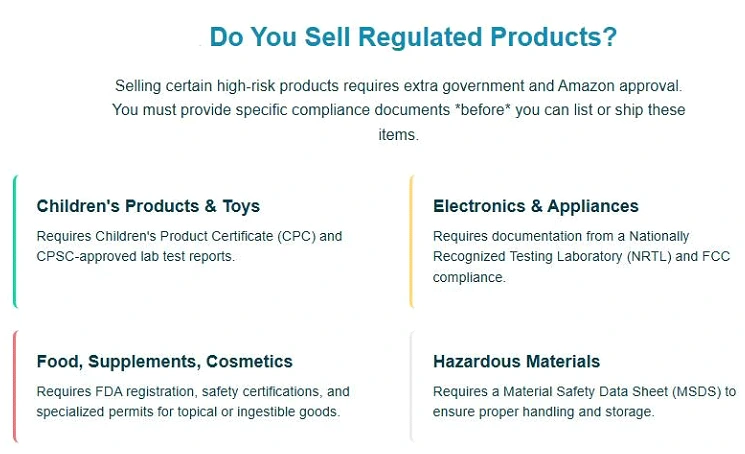
The FBM model suits sellers who prefer more control over their operations or sell unique, bulky, customized, or handmade products. Restricted items with certain categories on Amazon, like food, supplements, cosmetics, toys, or hazardous items, require licenses, certificates, or FDA approvals before you're allowed to sell. This applied to both sellers. For FBA sellers, Amazon will not accept your products into its warehouse without compliance documents. If you have a trademark for your brand, that doesn't replace the need for safety certifications or legal approvals. For FBM sellers, you'll need to show compliance before your listing goes live.
 Types of Business License on Amazon
The other question that sellers have in mind is: What business license do I need to sell on Amazon? It depends on your location, product category, and selling methods. It's best to check federal and local regulations, as every state and city has its own requirements, or consult an Amazon expert for hire who can help you through the compliance process based on your business goals. Understanding about business license Amazon will help you to get the right license. The license types are:
- General Business License
A General License is issued by your country; this license gives you permission to operate a business legally in your jurisdiction. If you're working from home, some areas still require this license. - Seller's Permit
The license is considered a sales tax permit. If you are selling in a U.S. state that collects sales tax, you need a seller's permit. On Amazon, you personally don't have to reach out to customers to collect tax; Amazon handles that for you. Because of Marketplace Facilitator Laws, Amazon is required to charge the correct sales tax at checkout, collect it from the customer, and send it to the state on your behalf. Some states still require Amazon sellers to hold a seller's permit to stay legally registered, even if Amazon is doing the tax collection.
For Example, you're an Amazon FBA seller based in California. A customer in Los Angeles buys your product for $100. California's sales tax rate is 7.25%. At checkout, Amazon will add $7.25 in sales tax, so the customer pays $107.25 total. Amazon collects that $7.25 and sends it to the California Department of Tax and Fee Administration. You, as the seller, don't handle that transfer, but some sellers need to hold a California seller's permit so the state recognizes the Amazon business legally. - Speciality Permits
If you sell food, alcohol, or products that are related to health, additional permits or certifications are required.
City Business License to Sell on Amazon
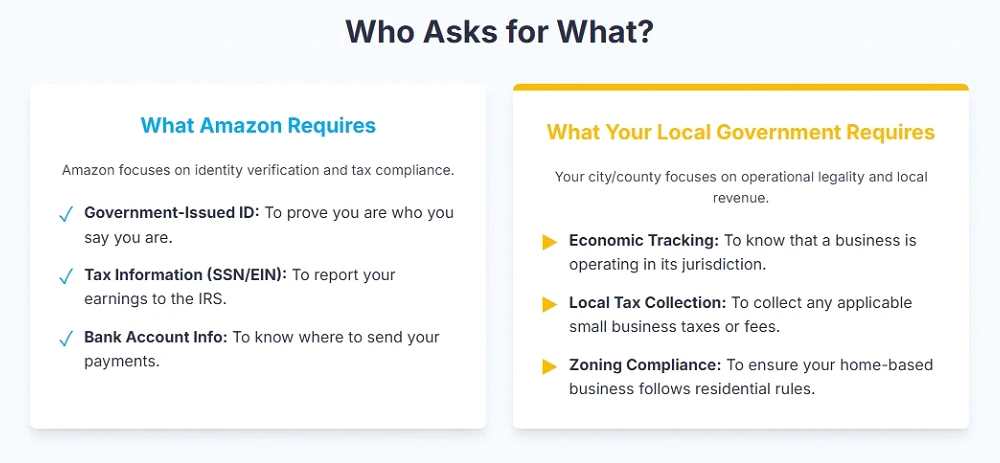
Sellers think, do I need city business license to sell on Amazon? This license isn't required by the platform, and doesn't comes in Amazon rules, but in many cases, your city government has its own rules for businesses operating within its limits. If you're unsure about business license Amazon can help you on city-specific requirements. If you're selling online and your customers never walk into a physical store, your Amazon business is considered a business.
Some cities issue business licenses for tracking local economic activity and collecting small local business taxes, and ensure that businesses operating in residential areas are registered officially. Having a city business license can be beneficial for sellers. It makes your operation legitimate for the banks and suppliers, which can help if you need to open a business account, apply for financing, or negotiate with vendors.
Do You Need an LLC to Sell on Amazon?
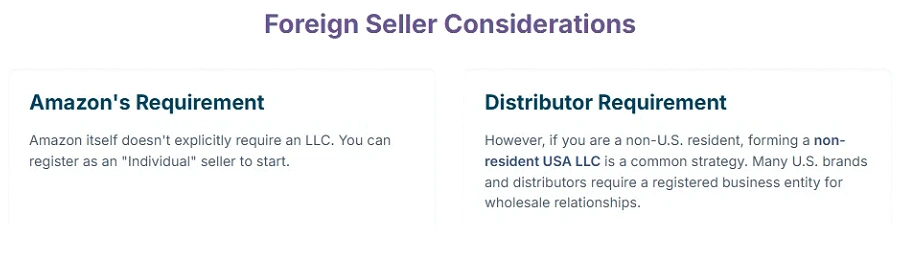
No, you don't need an LLC to start selling. If you want to scale your Amazon business, it's worth considering.
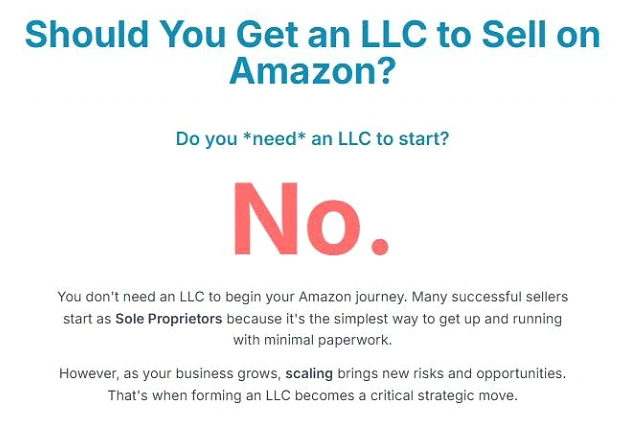
Many sellers start as sole proprietors because it's simple and requires less paperwork. But having an LLC (Limited Liability Company) offers benefits:
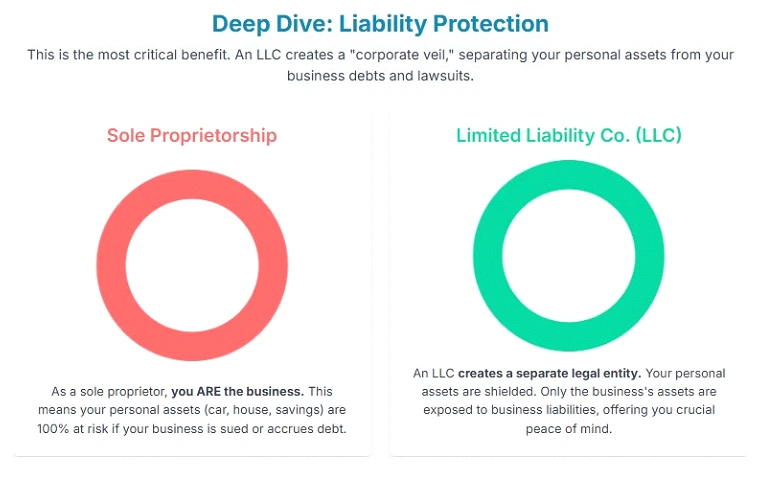
- Liability Protection: Your Personal assets are separated from your business, which protects you from lawsuits and debts.
- Credibility: For ordering your products, some suppliers require it comes as more professional.
- Tax Flexibility: Depending on your income, an LLC can offer tax advantages compared to a sole proprietorship.
Amazon Seller Business Account Type
When setting up your Amazon Seller Central account, you'll be asked to choose your Amazon seller business type. The options include:
- Individual Seller: In this no business license is required. It's best for casual sellers with low volume.
- Business Seller: This requires official business documentation and tax information.
Your choice here impacts the information Amazon requires for you. If you register as a business seller, Amazon will ask for your formation documents. If you select individual, you'll provide personal identification. Choosing the seller business type depends on your goals.
If you want to test the sale of any specific product, an individual account is best. But if you want to build a brand, registering a business seller is better in the long term, as it also gives access to tools and Amazon business account benefits like advertising features and enhanced brand protection.
Seller Permit for Amazon FBA
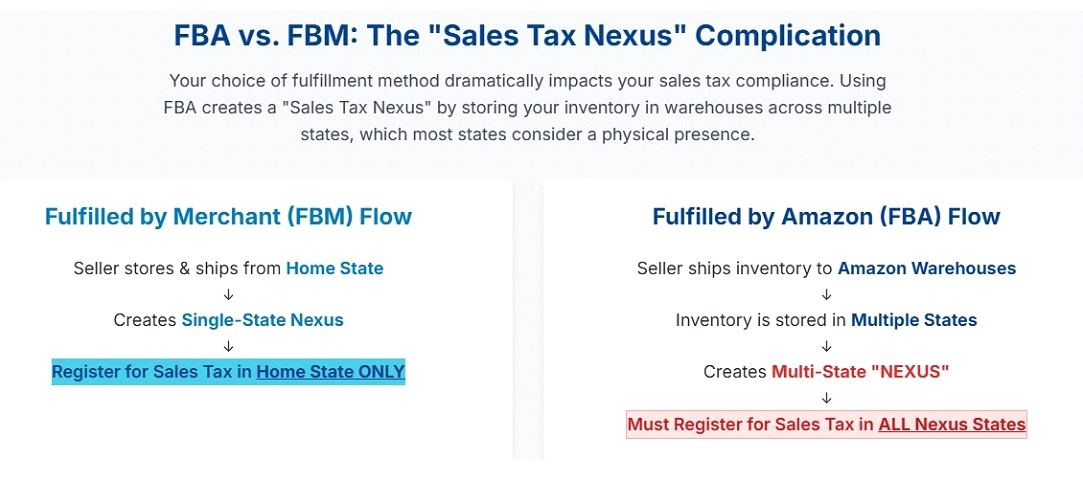
In FBA, Amazon stores your inventory in warehouses across multiple states, and in many cases, that creates a "tax nexus". In this case, you are responsible for collecting and remitting sales tax in multiple states, not only where you live. A permit for Amazon FBA will be required in more than one state.
Amazon provides tools to help sellers manage tax collection, such as the Marketplace Tax Collection (MTC) system, which calculates, collects, and remits sales tax in most US states, and Marketplace Facilitator Tax reports inside Seller Central let sellers track what Amazon has collected and paid on their behalf.
To access these tools in Seller Central:
- Log in to your Amazon Seller Central account.
- Go to the top menu and click Reports.
- From the dropdown, select Tax Document Library.
- There, you'll find your Marketplace Facilitator Tax reports and other tax-related documents that you can download and keep for your records.
When It is Important To Get a License
There are specific situations where having a license is a requirement. If your business falls in any of the following categories, you should secure the right license.
- Selling Restricted Categories: Amazon requires sellers to obtain specialized licenses or certifications before they are allowed to list and sell. These requirements ensure that only compliant and legally approved products reach customers.
- Working with Wholesalers: Many wholesalers and manufacturers will sell to businesses that provide a license or tax ID.
- Importing Products: Customs clearance requires proof of legitimate business.
Licenses You Need for Categories
The following are the items that fall in restricted items and require a license:
- Food & Grocery Items: Require FDA registration if the product is manufactured, packed, or distributed in the U.S. In some cases, proof of compliance with food safety standards is required.
- Health & Personal Care (including supplements): It requires Certificates of Analysis (COA) from an accredited lab. Supplement needs FDA compliance and Good Manufacturing Practice (GMP) documentation.
- Beauty & Cosmetics: Comply with FDA labeling requirements in the U.S, and for some products, they need ingredient safety documentation.
- Alcohol, Tobacco, or Vape Products: This needs specific state and federal licenses to distribute.
- Medical Devices: Require FDA approval or clearance in the U.S. (such as 510(k) clearance). The seller needs to provide certificates proving regulatory compliance.
- Children's Products & Toys: These comply with CPSC (Consumer Product Safety Commission) standards. Sellers will also need to provide Children's Product Certificates (CPC) and lab test results for lead, phthalates, etc.
- Hazardous Materials: Items like batteries, cleaning supplies, or aerosols require Material Safety Data Sheets (MSDS). Amazon has a special FBA Dangerous Goods program for storing and shipping these products.
Do FBA and FBM Sellers Need Business Licenses?
| For FBA Sellers (Fulfilled by Amazon) | For FBM Sellers (Fulfilled by Merchant) |
|---|---|
| Sellers need seller permit for Amazon FBA, as Amazon warehouses store your products, so they want proof that your items are safe and legally allowed to be stored and shipped. | You're responsible for storing and shipping products yourself, but Amazon still enforces the same category restrictions. |
| If you sell restricted products (like supplements, food, cosmetics, hazmat items), Amazon will ask for certificates, FDA registration, safety test reports, or permits before you ship your items to the warehouse. | You need to upload FDA approval, lab test results, or safety certificates before your listing goes live. |
| FBA sellers should provide documents such as Material Safety Data Sheets (MSDS) for hazardous goods, since these items need special handling in Amazon warehouses. | You ship directly, but if you don't have the right documentation, Amazon won't allow you to list restricted products. |
Scale Your Business Legally on Amazon with SpectrumBPO
Selling on Amazon comes with legal and compliance requirements depending on your products and business model. To keep themselves safe from penalties, sellers need to know about what licenses, permits, tax obligations, and category restrictions they need before starting to sell. If you're planning to scale or expand into restricted categories, partnering with a full ecommerce agency can provide strategic information, compliance support, and help streamline your operations. Setting up your business the right way from the start builds a strong foundation for long-term success on Amazon.
FAQs
You can sell on Amazon without a business license if you choose the Individual Seller Plan. If you want to sell products that are restricted or regulated, like food, supplements, cosmetics, and electronics, you'll need specific licenses, certifications, and FDA approvals before listing these on Amazon. Amazon itself doesn't need any business license, but in some states, it's a legal requirement, so check your state laws before starting. Most new sellers explore the business license Amazon to ensure they meet local and federal rules before starting.
To start selling on Amazon, you'll need:
- On the Amazon Seller Account, choose between an Individual or Professional (Business) plan.
- Provide a government ID, Tax Identification Number (TIN or EIN), and bank account details for payments.
- Prepare product listings, with titles, descriptions, and images.
- If you register as a business seller, Amazon will ask for your business license, formation documents, and state tax ID.
- If your products fall under categories like food, supplements, or cosmetics, you'll need additional permits or safety certificates.
Share this Post




Blog Categories
Uncategorized
