
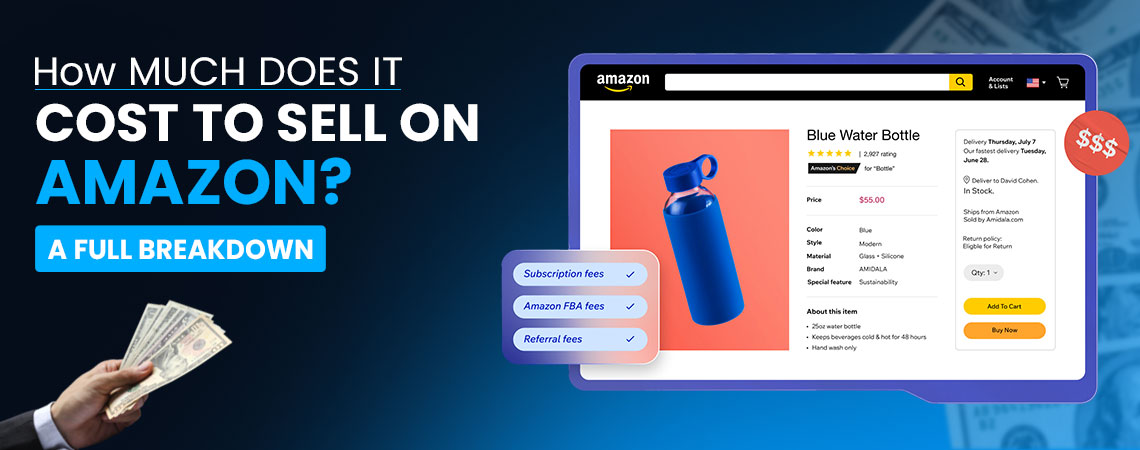
How Much Does It Cost To Sell On Amazon
Selling on Amazon can be a profitable venture, but getting to know the costs is very important to achieve success. The cost to sell on Amazon depends on your niche, selling strategy, and how much you're investing in advertising. The costs that sellers have to pay are referral fees, monthly subscription fees (for Professional accounts), and fulfillment costs if using FBA (Fulfillment by Amazon). A major attention today is the rising cost of Amazon PPC (pay-per-click) advertising, investment to stay visible in competitive categories, because Amazon seller fees depend on the categories; every category has different fees.
Many sellers also invest in Amazon SEO services to improve their organic rankings and drive consistent traffic without overspending on ads. Additionally, tariffs and import duties, especially for sellers sourcing internationally, have become a main concern that can directly impact their profit margins. Sellers carefully need to manage their niche selection, product pricing, and promotional budget, which can help them minimize costs and maximize ROI on the Amazon marketplace.
I am going to break starting point of how much does it cost to sell on Amazon, so you can estimate your selling fees with confidence and plan your Amazon business smartly.
 Understanding Amazon Seller Fees
One of the first things every seller should understand is how much does it cost to sell on Amazon, as this helps sellers create an effective pricing strategy and to remove their confusion about Amazon seller price, something that misleads and creates confusion for new sellers. By sharing personal experience, mistakes, and success strategies, the goal is to give real expectations and a strong starting point. Many sellers jump in without fully understanding the fee structure, which decreases their profitability. This will give you a roadmap to make smarter decisions. It's not just informational, it's meant to empower action.
Things You Need to Know Before Selling
Knowing how much does it cost to sell on Amazon helps sellers avoid confusion and prepare for the actual expenses that affect profitability. This is a complete breakdown of the fees for Amazon seller. It explains the differences between Individual and Professional plans, the role of FBA vs. FBM, referral and return fees, and how these can affect your overall profit. It also introduces real scenarios that can increase Amazon FBA creation fees and estimates to help sellers plan smarter, as seen in Amazon FBA Creation Fees: What Every Seller Must Know in 2025. Practical tips, like checking product dimensions and managing inventory, make it actionable. New and existing sellers who aren't able to get good sales can go to Amazon Advertising Services, which will help them get more traffic and fewer returns by getting to the root of returns.
Subscription Of Amazon Seller Fees
- Professional Selling Plan: The monthly plan is $39.99 per month, it doesn't matter how many things you sell. For both new and seasoned sellers looking to grow their businesses, this plan is perfect, especially for those wanting to sell over 40 goods per month. The Buy Box is essential for growing and boosting sales, and this plan gives sellers more chances to access services, including listing tools, advertising possibilities, and thorough reports.
- Individual Plan: The individual plan has no monthly subscription price, but sellers have to pay $0.99 per item after they are sold. This option is appropriate for new sellers who are just starting and don't want to pay before making any sales, or sellers who aim to sell fewer than 40 products each month.
- FBA Fees: Amazon seller fees depend on order size, product weight, and storage time while using Amazon FBA. Larger or heavier items come with high Amazon FBA charges due to increased order fulfillment expenses. From January to September, storage fees of $0.78 per cubic foot for standard-size items and $0.56 per cubic foot for extra-large and bulky items; from October to December, the fees range from $2.40 to $1.40. The total cost of being an Amazon seller increases due to long-term storage fees if your inventory is kept in the Amazon warehouse for more than a year.
One critical factor is to look into understanding the impact of U.S. and Canada tariffs on businesses and Amazon seller operations. Tariffs and import duties can affect your costs if you're sourcing from countries like China. - FBM Fees: Sellers can use the Fulfillment by Merchant (FBM) model to fulfill their orders themselves if they want to, but they will still have to pay some charges once the item is sold. FBA will not charge you for storage or fulfillment, but you will have to take care of packaging, shipping, returns, and customer support. The length of delivery products and your carrier regulate these Amazon seller fees.
- Referral Fees: When there is a sale, either through FBA or FBM. Amazon takes a cut of your revenue. This is also referred to as a referral fee, which is a percentage of the item's sale price. These Amazon selling fees can't be avoided and depend on your product category, making it important to factor them into your Amazon FBA pricing.
- Return Fees: If you're selling in categories where Amazon offers free returns to customers, you'll be responsible for return processing costs. These Amazon FBA charges can include repackaging or disposal fees, and they impact your overall Amazon seller cost if returns become regular because your account health goes into the negative.
Cost Idea
Here's a real-world breakdown of how much does it cost to sell on Amazon when starting out based on my own experience.
Important costs:
When I first signed up, I chose the Professional Seller Plan, which costs $39.99/month, but if you're doing transactions internationally, it will depend on your currency and your country's tax deduction criteria. Amazon also charges a referral fee on every sale, which depends on the product category and can be from 8% to 15%. I planned to get this plan because it provides all the key features available on the platform, which aren't accessible to someone with an individual plan.
Understanding Amazon's fee structure was great at first. I spent time reviewing Amazon's Fee Schedule and used free online calculators to estimate my profit margins before listing any products.
Stock costs:
I started with a test order of about $300 of inventory with 100 units, which was sourced directly through Alibaba. Costs depend on the product and supplier, but the stock requires upfront capital. Sellers can source the products from Alibaba or any agent from China, which can help with the supply of products.
Choosing the right product without spending too much was tough. I didn't want to get stuck with items that wouldn't sell. I used Google Trends to do my research and get the items that are more in demand, then I started with a limited quantity to test the market and read reviews of similar products to check the demand for those products. I also joined seller groups on Facebook to learn from others' mistakes. Learned that working with reliable suppliers and negotiating minimum order quantities can help you minimise your budget.
Shipping costs:
There are two options for shipping, by sea or by air. By sea, it takes almost 45 days, and by air, the time is around 1 week. Charges vary according to the location and, item's weight. I paid around $50 to ship my first batch from the supplier by sea, as it was cheaper than by air, and another $30 to $70 to send items to Amazon's fulfillment centers; you can't select a warehouse of your own choice. Amazon lets you know which location you'll be having. If you're using Fulfillment by Amazon (FBA), they also charge fulfillment fees (e.g., $3 to $6 per unit) depending on product size and weight.
Tools and supplies:
I began with free tools but then got a subscription to Jungle Scout at $49/month. I also spent about $30 on basic supplies like bubble wrap, shipping labels, and packaging tape. Keeping track of inventory, keyword rankings, and sales was time-consuming, so I got myself into full-service eCommerce solutions for beginners. Investing in a reliable place can help automate most of the operations. This gave me an understanding of what was working and what wasn't, so I could make better decisions.
Smart Ways to Cut Down Your Amazon Seller Costs
- Upgrade to the Pro Plan: Paying $39.99/month for a Professional Seller account might seem like a commitment, but if you're making more than 40 sales a month, it pays for itself, and you'll be able to recover the cost. Also, you can unlock access to advanced tools like bulk listing, promotions, and reporting, which can help you grow faster and more efficiently than using an Individual plan.
- Be Strategic With Product Categorization: All products are not categorized equally when it comes to Amazon seller pricing. Amazon's referral fees depend on the category, so take the time to research which products can help you get more sales and are in demand. It also matters how they are classified, which makes the difference between a 20% and 15% fee without changing your actual product.
- Check Dimensions Before Shipping: Items that are not measured correctly waste a lot of money. As Amazon FBA fees are calculated on the size and weight of products, if the system registers your item as larger than its actual size, you'll end up overpaying. Always re-measure your product and packaging, and consider using smaller, lighter materials to lower your Amazon FBA cost.
- Let a 3PL Handle: Working with a Third-Party Logistics (3PL) partner can help you streamline your operations and bring down shipping expenses. 3PLs specialize in packing and shipping to Amazon's standards, which can reduce costly mistakes and help you avoid rejections or non-compliance penalties, keeping your Amazon seller charges in check.
- Keep Your Inventory Moving: Keeping slow-moving/unsold inventory in Amazon's FBA warehouses for too long can lead to monthly and long-term storage fees. Make sure to audit your inventory. If you feel slow-moving products, create a plan to sell them off, remove them, or send them elsewhere before fees pile up.
- Use What You Have: You don't need to spend money on branded or new shipping supplies when you can reuse clean boxes and packing materials you already have. Not only does this help the environment, but it also cuts packaging expenses, a small but helpful way to reduce your Amazon FBA charges.
- Monitor Performance Metrics Closely: Account health problems, like higher return rates or late shipments, can affect your seller rating and cost you in the long run. Stay on top of your metrics, respond to customer queries quickly, and resolve complaints quickly to avoid losing great benefits or being forced into more expensive shipping tiers.
- Stay Updated on Fee Changes:Amazon adjusts its fee structure regularly, especially around peak seasons. Some sellers also look for services like Amazon brand management solutions, which help them improve their product visibility, improve their brand presence, enhance listings with A+ content, and build customer trust. Staying updated on Amazon FBA pricing updates means you can plan, adjust your margins, or even pause low-performing listings before costs overshadow profits. Don't let sudden changes catch you off guard; knowledge is profit.
New Amazon Sellers' Challenges
Most of the new Amazon sellers find it hard to understand how to manage costs like shipping or inventory delays. There's also confusion about which plan to pick and how to manage costs like shipping or inventory delays. Not clarifying the products can lead to higher fees without you knowing about it.
Many have difficulty with their listings or choosing the right fulfillment method, which directly affects profit margins. Most Sellers underestimate the value of marketing tools, which can help them gain a competitive advantage on Amazon. Without this knowledge, sellers overspend or price their items too low to profit. If you need any assistance, Spectrumbpo is here to help you out regarding any e-commerce platform.
Share this Post




Blog Categories
Uncategorized
