
Amazon FBA Creation Fees: What Every Seller Must Know in 2025
Millions of sellers can grow their businesses without having to handle challenging logistics thanks to Amazon FBA, which has transformed e-commerce. The secret to Amazon FBA success, though, is realizing the whole fee schedule that could determine your profitability. Let's explore all you need to know about Amazon FBA creation fees, from fundamental setups to more advanced optimization techniques.
 10 Shocking Truths About Amazon FBA Fees Every Seller Must Know
- Hidden Fee Alert: The 'Silent Profit Killers' Most New Sellers Discover Too Late
If you aren't paying close attention, why apparently modest charges could add up to cut your margins by as much as 40%. Many sellers give just referral fees some thought; they overlook storage, return, and dimensional weight costs that build up over time. - The $10,000 Storage Mistake: Why January Could Bankrupt Your Amazon Business
How seasonal inventory mismanagement generates terrible fee avalanches that have driven sellers to give up goods. Peak season storage costs rise by 300%, transforming overnight profitable items into money losers. - Amazon's 'Double-Dip' Fee Structure: That's Legally Draining Your Profits
Amazon's unexpected method of charging you twice for the same service, referral fees plus fulfillment fees, and how clever sellers are using this to their benefit via deliberate product selection. - The Referral Fee Loophole: How Category Selection Could Save You Thousands
Why do the same products have significantly different profitability just from taxonomic decisions? Certain categories have lower referral rates that could greatly enhance margins. - Size Matters: The Dimensional Weight Calculation That's Costing You 30% More in Fees
Almost 70% of sellers make a packaging error that immediately raises their FBA fulfillment fees. Knowing both dimensional weight and actual weight will be quite helpful in saving money. - The 'Fee Honeymoon' Is Over: Why Long-term Sellers Face Shrinking Margins
How Amazon's systematic fee increases affect well-known sellers, and the counterintuitive approach that shields your company from margin erosion. - Return Fee Shock: The True Cost When Customers Click 'Send It Back'
The concealed math of returns that renders certain product categories complete profit killing trip wires. Product choice depends on an understanding of return rates by category. - The Fulfillment Center Secret: Why Your Inventory Location Dramatically Impacts Your Bottom Line
Your profitability, particularly for these five product categories: oversized items, hazardous materials, fragile goods, seasonal products, and international shipments, depends on where you are within Amazon's network. - FBA Small and Light: The Underused Program That Could Slash Your Fees by 30%
Why this special program is Amazon's best-kept secret for certain merchants---and how to tell whether you qualify for lower charges on small, light products. - Paying for Empty Space: The Packaging Error Costing New Sellers Millions Collectively
The basic dimensional change that will immediately lower your FBA Fees and enhance the presentation of your product and customer experience.
Diving into Amazon FBA Creation Fees
Knowing Amazon FBA creation Fees could determine your level of e-commerce success. Many sellers find out too late that small charges might cut profit margins by as much as 40%. Often, a clear understanding of Amazon's charging mechanism, combined with awareness of Amazon advertising cost, separates profitable from unprofitable products.
Reading this will provide you with essential information for:
- Hidden fee structures affecting your bottom line more than claimed rates
- Seasonal price changes that might drive unsheltered companies under peak season to bankruptcy
- Strategic plans to maximize profitability by cutting costs
- Category-specific insights with the potential to cut thousands in referral fees
- Sustainable business development's long-term cost control plans
Why you Need to know about Amazon FBA Creation Fees
New Sellers
Learning about Amazon FBA for beginners is vital for new sellers. Reading this will help you avoid the expensive errors that make 70% of new Amazon sellers give up on their first items if you're just starting your journey. You will grasp the entire fee ecosystem from day one and learn to evaluate actual profitability before making inventory commitments.
Existing Sellers
You will learn contemporary 2025 cost estimates and sophisticated optimization techniques for established vendors. Find out how logical price hikes target seasoned sellers and learn surprising tactics to safeguard your margins as you grow your firm.
Considering Amazon as a Business
Whether you see Amazon as a possible chance or are just interested in e-commerce economics, this guide provides useful information on one of the biggest marketplace platforms in the world and the real expenses of running an Amazon business.
Helpful Resources
You can read further in detail about Amazon FBA how much inventory cost and Amazon FBA Creation fees from these resources:
- Official Amazon Seller Central records and present 2025 fee schedules
- Actual seller encounters from successful Amazon companies producing over $100,000 yearly (see Expert Insights)
- Industry analysis tools include Seller Amp and Keepa for profit estimates.
- YouTube educational material, like tips and tricks for Amazon FBA sellers to succeed.
- Fee revisions now, and Amazon's declared US referral and FBA fee changes in 2025
- Amazon's own revenue estimation tools, like Amazon Revenue Calculator and fee calculators
Understanding Amazon FBA Creation Fees
What is FBA?
The first and foremost question for beginners is What is FBA? Amazon FBA (Fulfillment by Amazon), a full-service program whereby sellers keep goods in Amazon's fulfillment centres. Amazon manages picking, packing, shipping, customer support, and returns management. With Amazon's trusted delivery network and Prime shipping qualification, this service lets vendors expand their business without having to worry about logistics.
Core FBA Fee Components
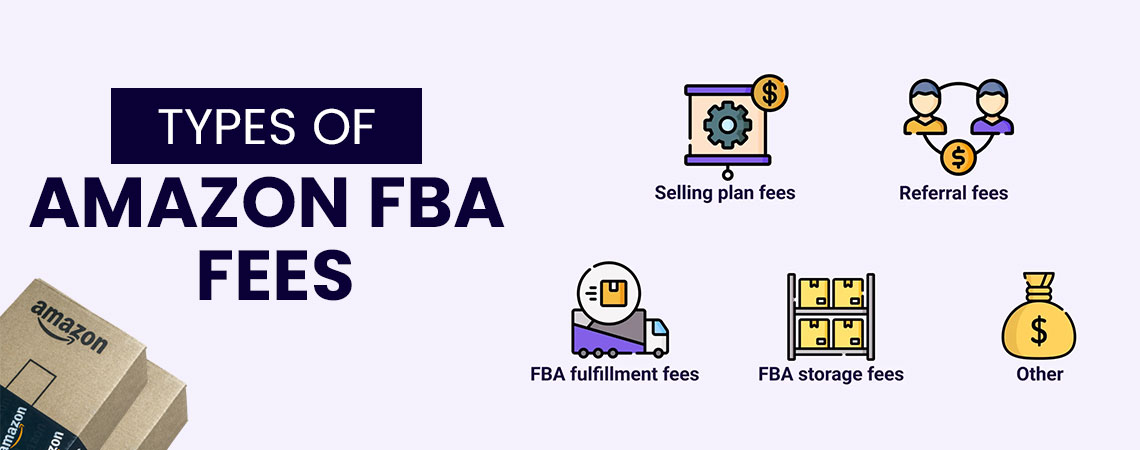
Amazon Seller Account Fees
- Professional Seller Account: $40 a month, $0 a sale
- Individual Seller Account: $1 per sale plus $0 per month
- Recommendation: Sellers aiming for over 40 units monthly need professional accounts since they include more bulk listing tools, sophisticated reporting, and higher Buy Box qualifying. You may also want to consider hiring an Amazon listing Agency to save on listing tools costs.
Amazon Referral Fees
The next question that pokes your mind is What is an Amazon referral fee? Charged as a flat 15% in most sectors, this is Amazon's commission for using their platform. This charge applies whether you utilize FBA or FBM (Fulfilled by Merchant). For a $100 product, Amazon charges $15 as a platform fee, independent of your fulfillment approach.
Referral fee variations by category:
- Most categories: 15%
- Books, music, videos: 15% (They might be the best items to sell on Amazon for beginners, usually.)
- Electronics: 8% (at least fees)
- Grocery: 15% (subject to category limitations)
FBA Fulfillment Fees
FBA fulfillment Fees depend on product size and weight categories:
Standard Size Products
- Small standard: $3.22 -- $4.75
- Large standard: $4.75 - $18.25
Oversized Products
- Small oversized: $9.73 to $21.25
- Medium oversized: $21.25 -- $37.25
- Large oversized: $75.78+
Amazon's picking, packing, delivery, customer support, and returns handling are all covered by these fees.
Storage Fees (Monthly and Long-term)
Monthly Storage Fees:
- Non-peak season, January to September: $0.78 per cubic foot for typical size.
- October through December, peak season: $2.40 per cubic foot for standard size.
- Oversized Items: Usually lower per cubic foot.
Long-term Storage Fees:
- Applied to inventory aged beyond 365 days
- Fee: Greater of $6.90 every cubic foot or $0.15 every pound fee
- Critical timing: Evaluated on the 15th of every month
Shipping to Amazon (Inbound Costs)
- Established vendors are charged $0.70 per pound on average.
- Usually, $1.00+ per pound from ineffective packing for a new seller costs.
- Proper box sizing helps to lower costs to $0.40--$0.50 per pound.
- Carrier choices include UPS, FedEx, and Amazon's partnered carriers.
What is an Amazon Fulfillment Center?
So the next question in your mind must be, What is an Amazon fulfillment center? These are big, very automated warehouses dispersed globally to guarantee quick consumer delivery. Amazon has more than 185 fulfillment centers around the world, all fitted with cutting-edge robotics and inventory control technologies.
Key features of fulfillment centers
- 1-2 day delivery to big population centers' strategic placement
- Environmental controls for product preservation
- Sophisticated security systems shielding stocks
- For efficiency, automated sorting and picking systems
- Processes of quality control guarantee consumer happiness
Advantages of Knowing Creation Fees
Accurate Calculation Of Profit Margins
Accurate knowledge of certain Amazon FBA creation fees allows one to calculate true profit margins before committing to stock. This would prevent the common mistake of finding products unprofitable after they have already been purchased, which is an experience of almost 60% of sellers entering the market.
Informed Product Choices
Knowing fee types helps sellers identify product types with higher profit margins. Typically, products that have little or no return rate, take up less space, and sell quicker tend to have the greatest net profit.
Inventory Planning for Seasonal Changes
The cost of storage fees for seasonal change can raise costs by 300 percent! Always look out for best Items to sell on Amazon FBA for beginners, even in seasonal changes. Proper planning for a vital selling season and preventing one from experiencing a horrible avalanche of charges during the October-December period safeguards cash flow.
Agile Pricing Strategies
Knowing fees accurately keeps sellers at acceptable profitability margins that provide an opportunity for agile pricing models. Many sellers unknowingly underprice their goods by 20 to 30 percent based on inaccurate pricing knowledge.
Paid in Cash Flow
Adequate fee anticipation provides the right cash related to working capital activities, such as planned reinvestments or using fees to cover the bill and pay for products.
What are the pros and cons of using a third party logistics company as an Amazon FBA seller?
Sellers must navigate very different trade-offs when comparing options of amazon fba vs 3pl options impacting profitability and control -Third-party logistics companies provide better flexibility over storage length and integrations with custom packaging and multi-channel fulfillment (and usually a better, lower long-term storage cost). Amazon FBA provides consumer trust through Prime enabled listings and simple returns processing. In the FBA vs 3PL conversation, cost issues may include: FBA creation fees providing a comprehensive outline of receiving, storage and fulfillment services for a flat fee at streamlined rates versus 3PL providers may be offering competitive rates despite needing to compare for volume sellers with negotiating prices. The amazon fba vs 3pl choice comes down to your business model: FBA is better suited for sellers intending to get the most out of the amazon specific benefits and ease of use. Conversely, 3PL solutions are better suited for sellers needing and wanting greater operational flexibility and cost control across multiple sales channels.

Common Challenges New Sellers Face with FBA Fees
Flow Limits In Cash
New sellers sometimes find upfront payments, including professional account fees, initial inventory cost, and shipping costs, difficult to manage before any income appears.
Total Fee Impact Estimation Difficulties
Beginners find it difficult to determine actual profitability because of the complexity of Amazon's fee structure, which results in poor product choices.
Uncertainty On Seasonal Changes
Many new sellers unready to handle peak season fee hikes find their once profitable goods become a loss for Q4.
Confusion Regarding Return Processing
Though sometimes neglected, it is vital to know how returns influence profitability and which product categories have higher return rates.
Unexpected Charges From Wrong Preparation
Unexpected Amazon prep fees of $0.55 per unit arise from inadequate packaging, absent labels, or wrong product preparation.
Surprises In Long-Term Storage Fees
Particularly for sellers who do not track inventory age, slow-moving stock can build terrible long-term storage costs.
Limited Forecasting Data
New sellers have no past data to estimate fee effects. Hence, initial product selection is more difficult.
Practical Solutions for New Seller Fee Challenges
Start Small and Test
Starting small with inventory quantities (10 to 50 units) will allow you to evaluate genuine cost trends before making major purchases.
Utilize Amazon's Fee Calculator
Prior to each product purchase, utilize Amazon's FBA Revenue Calculator to learn what total costs may be and the potential profit after fees.
Standardize Review Decision-Making Timelines
Standardize your reviews of fees weekly upon initial review, and as you gain experience and information, you can review monthly.
Establish Basic Tracking Regimes
Simple spreadsheets to track each type of fee over your inventory line will help you track trends and opportunities.
Join Educational Networks
Participating in seller communities and discussions will help you avoid common pitfalls through the experience of others.
Develop Removal Plans Strategically
Develop plans for removal orders prior to long-term storage deadlines to avoid additional costs on unused, slow-selling inventory.
Develop Fee Reserves
Incorporate a 5--10% fee reserve in your corporate budget to cover any surprises or seasonal fluctuations.
Challenges for Existing Sellers with FBA Fees
Rising Costs from Amazon
Amazon frequently adjusts its fee structure, especially for larger or seasoned sellers like myself. Even minor increases in fees will eventually take a toll on your bottom line.
Decreasing Profits
Many sellers who are accustomed to making nice profits may assume that they are losing money, because Amazon continues to change regulations and rule surrounding their fees.
Issues with Your Inventory Score
You could ultimately have a low Inventory Performance Index (IPI), if Amazon take limits the total space you have available to work with, or simply overcharges you with fees when you inventory runs low, which will impact your business.
Changed Product Category
Amazon will change your product category from time to time, and when they do, the referral fee you could incur for selling that product could be dramatically different and could affect the price and amount you charge for your product.
International Selling Challenges
New and international sales, mean new costs, possible currency issues, and new operating procedures making it more difficult to maintain and control your business and profits.
Practical Solutions for Existing Sellers
Management of Inventory Performance Index
- Maintain IPI scores of at least 450 to avoid storage limits and excess fees. Utilize
- Regular and comprehensive analysis of your inventory, clearing slow-moving inventory
- Equalized sell-through rates across your product catalog
- Planned inventory for seasonal peaks
Use Data To Find Fee Leaks In Your Catalog
- Use reporting tools and advanced analytics to find drop-off with fees in your catalog:
- Measuring profits on a product level
- Measuring return rates per category
- Measuring storage costs per unit
- Identifying dimensional weight opportunities
Inventory Planning Seasonally
- Create sophisticated planning to minimize storage fees during peak seasons.
- Inventory reduction strategies in Q3
- Demand forecasting in Q4
- Clearance/discount planning in Q1
Fulfilment Options and Decision Making
- Decide when FBA or other fulfilment methods are cheaper for you, as a seller:
- High-margin, slow-moving items could be a good fit for FBM
- Specific product categories could be good candidates for 3PL services
- You could offer hybrid strategies to different consumer segments
Negotiate Inbound Shipping For Value With Shippers
- Established sellers may be able to negotiate their rates for inbound shipping
- Volume discount rate with a preferred carrier
- Consolidate and ship with different approaches
- Regional carriers for inbound shipping
Scaling Your Business While Managing Fees
Fee Considerations for New Product Lines
When modifying your catalog and adding new products, you should consider all fees associated with choosing a product in the first place. You may want to evaluate:
- Referral fees associated with your specific category
- Size and weight, and how that impacts fulfillment fees
- What the industry standard return rate is for various product types
- How long do you intend to store your inventory, and how quickly do you think your product will sell
International FBA Opportunities
Marketplace fees are not the same in every marketplace:
- Some FBA programs in Europe have different storage fees
- Some FBA programs cover multiple countries through a pan-European program, or other distributors
- You have to think about currency hedges for fees if you have to pay in different currencies
Business Planning Integration
Finally, we would advise incorporating your fee-monthly/fee-yearly forecasting into your strategic plan as a pre-budget function
- Planned a budget for fee applications on an annual basis.
- Adapting the margin targets when the fees increase.
- Planning the scenario for getting a different growth rate in your revenue.
Automation and Tools
You should put measures in place for continual fee management
- Automated dashboards that factor in fee tracking and profitability.
- Alerts for products that are declining in profitability
- Building an age of inventory-reporting system
Professional Support
If you are not comfortable with the accounting practices associated with FBA, we would recommend you engage accountants and consultants who have knowledge or experience with FBA.
- Consult on the tax implications of the various fees associated with FBA.
- Structuring your business (e.g., as a Limited Company vs Sole Trader) to optimize/improve profit/savings on fees.
- Consult on other business strategy fees.
- Wondering where to get All-in-one Amazon FBA/FBM Services? Professional agencies provide integrated support, from logistics and inventory to tax and listing services, helping streamline operations and reduce costly errors.

Fee Calculators and Tools for Amazon FBA
Utilize Amazon's FBA Revenue Calculator
The Amazon FBA calculator is the preferred calculator to help determine fees and profitability for products sold via the FBA program.
- Step 1: Enter the product dimensions and weight
- Step 2: Enter your cost and selling price
- Step 3: Choose your fulfillment method (FBA or FBM)
- Step 4: Check the specific fee breakdown
- Step 5: Understand profitability and ROI.
Third-party Tools for Calculation
Seller Amp: A $20/month tool that lets you:
- Calculate profit in real-time
- Integrate historical sales data
- Compare FBA and FBM
- Analyze multiple products at once
Keepa: A product research tool that provides:
- Historical pricing data
- Trends in sales rankings
- Fee impact over time
- Identify market opportunities
Considering Advanced Reporting Options
For established sellers, consider:
- Potential custom dashboarding
- Integrating directly with your accounting software/API
- Automated profit/loss reports
- Fee trend analysis tools
Expert Insights: Real Seller Experience
Based on the analysis of a successful Amazon seller (Patrick) who generated over 100,000 in profit in their first ten months, here is a list of things to consider:
Initial Strategy
Patrick stated: "I primarily say if you are a new seller, do you want to focus on selling the products Merchant fulfilled, but typically, over a long period, you end up mostly selling products from FBA."
Fee Management Philosophy
He further elaborated: "Most of the products you are buying should sell within the first 30 days, so you won't have to worry about storage fees, but I do want to give you guys a general idea of what that looks like."
Tool Recommendations
We asked Patrick about tool recommendations, and he said: "Most of the heavy lifting, calculating the fees on your products, will be able to be done through the Seller Amp product research tool."
Practical Shipping Advice
A shipping advice that Patrick gave was: "Anything under one pound is typically going to be USPS, anything above one pound is typically going to be UPS, and just get whatever is cheapest through Amazon when you're actually buying your shipping."
Storage Fees Savvy
He said: "Amazon just announced they also won't raise fees in 2025, which is very, very nice. The only ones I found confusing were the monthly storage fees and the long-term storage fees, but unless you're buying items that you're never planning to sell regularly, you don't have to even really worry about them. For me, Amazon brand development was the key element to the success of my Amazon FBA overall!"
Product Category Strategy
The overall product strategy, according to him, was: "Usually in the long run you end up selling more and more items that are returned less and less proportionally by the type of product. For example, beauty products, grocery products, pet supplies, vitamins, and grocery items, for example, cannot even be returned, while shoes and electronics (some higher-end) relatively return with way more frequency."
Is using the Amazon FBA program really a way to make a lot of money?
Amazon FBA can create real income opportunities but success relies on thorough product selection and understanding all the related costs. Many sellers look to fba imports from overseas manufacturers purely for profit-margin purposes, but the real issue, regardless of where you source your fba shipping products, is Amazon's FBA creation fees, which include costs for receiving, storage and fulfillment—and can impact profitability just as much if not more. Amazon has many sellers that generate six-figure revenues annually, but reality is that most successful fba businesses require plenty of capital, typically around $10K-$50K in cash and 6-12 months of earnings before they will see any profits. It's also important to note that money is money and Amazon provides sellers with real earning potential, and not a get-rich-quick scheme. When you read those success stories, believe it or not, many sellers saw fba imports as a real business by: 1) conducting market research to find products with a demand that could be rediscovered by following the Amazon algorithms; 2) concentrating their efforts on reselling and realizing the need to continuously reinvest the profits from sales back into inventory and spends for advertising so they could actually scale their businesses.
Recent and Upcoming Fee Changes
2025 Fee Updates
Amazon has announced some significant changes for 2025:
- No overall fee increases for most categories
- Storage fee changes for peak season inventory
- New programs like the FBA Small and Light expansion
- Harmonization of fees among international marketplaces
Fee Trends
Amazon has taken action on fees over the past five years:
- Referral fees remain around 15% and have stayed relatively consistent
- Storage fees have increased approximately 20% each year in the last five years
- Fulfillment fees have grown along with ESC inflation and the continuous improvement of services
- There is a new fee structure emerged for certain services
Staying on Top of Fees
To stay updated on fee changes:
- Opt in for notifications from your Amazon Seller Central account
- Join seller groups or communities
- Follow blogs and publications in the space
- Attend Amazon seller conferences or webinars
- Keep an eye on your Seller Central fee dashboard on a regular basis
SpectrumBPO: Experience with Amazon FBA Fees
As a business that has guided countless sellers in navigating the complicated fee structure Amazon has in place, we have firsthand knowledge of how Amazon FBA creation fees have changed over time. As an expert Amazon FBA agency, our experiences at SpectrumBPO include:
Comprehensive Fee Analysis
- We have helped and tracked changes in fees in more than 50 product categories since 2020
- We have calculated profit impacts based on sellers that had revenues as low as $1,000 and as high as $1,000,000+ per month
- We have documented seasonal trends and related costs for sellers using various business models
- We have identified optimization opportunities that have led to savings to our clients in the millions collectively
Client Success Stories
SpectrumBPO has worked with many sellers who turned around struggling businesses:
- Case Study 1: Optimized inventory and freed up space to reduce storage fees by 60%
- Case Study 2: Category optimization, which resulted in an increased 25% margin
- Case Study 3: Proactivity and planning mitigated $50,000 in long-term storage fees that sellers pay every time they let inventory sit in Amazon
Systematic Approach
Our approach is simple but systematic:
- Take stock of the seller's existing account fees
- Optimize the seller's product portfolio for fee opportunities
- Minimize elevated costs during the seasonal plan
- Even for sellers who just deal with Amazon, we build in ongoing monitoring systems to help relieve the tension of feeling that management
- Internal seller programs to educate teams about fees
Key Learnings
Through our various engagements, we have learned:
- Managing fees is ongoing (not just a one-time calculation)
- Every small optimization counts; they start to add up and mean real savings
- A seasonal plan is essential for long-standing viability
- Utilizing integrated tools and methods takes waste out of the fee management process
- Education and training are critical to finding successful outcomes
The importance of understanding Amazon FBA creation fees cannot be overstated when it comes to e-commerce strategies in 2025. Paying fees to list and sell items may be troublesome on the surface; however, with a little learning, this simply takes the place of your profits and becomes a fixed expense on your overall business strategy, including a great listing to making use of top notch graphic design services for Amazon and if done properly, can lead to exposure with the largest eCommerce platform in the world.
Things to recognize from this are:
For the New Seller
- Understanding, it is best to start small and work your way up after building a proven process for common-sense supplier and product analysis.
- Use tools like Seller Amp to get the most accurate profit levels for your items.
- When building a product portfolio of selections or items for sale, stick primarily to fast-moving products to minimize holding costs or storage through a fee structure.
- Build fees into your budget in your fixed costs.
For the Existing Seller
- Continuously look for ways to monitor and improve your fee structure.
- Understand that forecasting will become a large part of your portfolio analysis.
- Simply using advanced analytics with your forecasting and timing
- Consider trying to branch out to minimize decreases within your fee structure.
Universal Principles
- Consider fee management an ongoing strategic Endeavor
- Use Amazon's tools and resources for better insight
- Stay up-to-date on fee changes and policy updates
- Focus on products and categories that make sense financially in regard to fees.
Let's keep in mind that when it comes to fees on Amazon, you are not only paying for access to a marketplace with unmatched reach, you are also paying for built-in logistics and buyer trust. You should rely on a trusted Amazon FBA logistics service if that's not your strong suit as this can make or break your business. When fee management is done correctly, you should not see it as a cost to your profits, but rather an invested expense to grow your business.
The best-selling sellers on Amazon approach fee optimization as a competitive edge; with a whole fees ecosystem to understand and strategic management, you can create a profitable and scalable Amazon business that operates within Amazon's fee structure, while providing customers with excellent value.
If you are new to the Amazon ecosystem or optimizing an existing business, understanding how to master Amazon FBA creation fees will help you as long as you are in the world's largest e-commerce marketplace. Need some assistance with overall Amazon FBA management? Call SpectrumBPO and get advice from the best Amazon FBA experts out there. Take the first step of building your online store now!
Share this Post




Blog Categories
Uncategorized

