

How to Define eCommerce Prioritization Criteria
In ecommerce prioritization criteria are about focusing on the actions that create the greatest impact for your business. The scoring model helps sellers to organize this process by assigning scores to projects, which are based on factors like ROI, risk, urgency, and available resources, making it easier for them to compare and select initiatives that have high value. The Rule of Three reminds sellers to concentrate on the three important tasks that drive the majority of results, keeping efforts focused and meaningful. The 4 D's of prioritization, which are do, defer, delegate, and delete, give a clear way to sellers so they can manage their time and decide which tasks they need to complete immediately, postpone for later, assign to others, or remove. This is when combined with the 80/20 rules, it highlights that 20% of efforts that's produce 80% of outcomes. By following these methods, sellers can make a balanced system that will improve their productivity and help them grow in a competitive environment.
Online marketplaces such as Amazon, Walmart, Etsy, and eBay all use different ranking and priority metrics, making it crucial for sellers to understand how to define ecommerce prioritization criteria that align with each platform's algorithm and growth potential, which sellers must adhere to in order to improve visibility of their product listings and ultimately boost the conversion rate to sales. In addition, these metrics will differ based on whether a seller is new, building a reputation or has an established seller performance that's now being compared to a set of optimization measures and buy-box win rates.
E-commerce prioritization is important for scaling strategy, optimizing advertising spend towards business goals, and overall customer experience reporting. If sellers get the understanding of how to define ecommerce prioritization criteria, it will help them to make smarter, data-backed advertising decisions. One data-informed framework to define e-commerce prioritization criteria would consist of:
- Identifying revenue-driving objectives
- Understanding market trends and user needs
- Assessing ad impressions, conversion rate (CVR) and search rank optimization
- Ultimately established frameworks for facilitating profit-focused PPC strategies such as MoSCoW, RICE, and the Value vs. Effort Matrix.
However, sellers are contending with obstacles originating as a result of data overload, specific needs required to develop Amazon SEO service, limited resources, and developing competitor benchmarks. These factors could be optimized and addressed using more agile advertising campaign architectures, real-time bid negotiation, and utilizing smart bidding strategies based on technology to defend against competitors. A successful e-commerce strategy starts from responsiveness and a continual revaluation of priorities based on performance metrics, and per ad campaigns that are agile in nature, so sellers can compete in fast moving marketplaces.
Sellers would also have an advantage using Amazon DSP to reconceptualize click-through-rates and optimize more traditional sales based on ranking, while still continuing to utilize impactful strategies to optimize for continued opportunity and growth as the landscape for e-commerce continues to evolve. Alongside strategic planning, ensuring adequate Ecommerce Business Insurance coverage helps protect sellers from potential risks as they scale operations in dynamic online marketplaces.
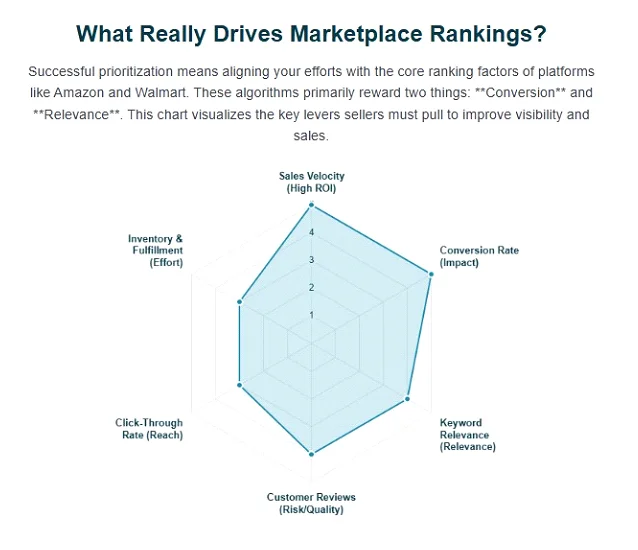
 Golden Rule of Steps to Define Ecommerce Prioritization Criteria
Before applying the following steps, sellers should understand how to define ecommerce prioritization criteria to ensure every initiative aligns with performance and growth objectives.
Emphasize on business goals that include not only revenue growth, market share growth, or consumer retention; it's important for sellers to know how to define ecommerce prioritization criteria in order to match the PPC campaign strategies, sellers should effectively use their advertising budget to ultimately drive long term profitability. Sellers should only prioritize the top converting keywords and understand their overall bidding strategy to better capture market share and grow a brand.
Measure projects with operational efficiency, impact on the customer, and potential income objectives. Understanding how to define ecommerce prioritization criteria ensures these measurements reflect true business impact. To maximize listing visibility sellers should also be keyword savvy; by looking at data - search impression share or clickthrough rates, sellers can make the right decisions. Sellers should also understand their Buy Box win percentages as well as value of a customer in order to make the biggest decisions.
Utilize quantifiable KPIs (key performance indicators), such as ROI (return on investment), conversion rate, or consumer life cycle. To interpret these KPIs effectively, sellers must know how to define ecommerce prioritization criteria that will monitor their analysis. In order to identify opportunities for optimizing the allocation of an advertising budget in search results to generate more sales for sellers, opportunities could be identified through CTR (click-through rate) or ROAS (return on ad spend). In order to leverage customer engagement, and an increase in profits, you would need a conversion-ready listing.
Prioritization efforts of initiatives should have a weighting variable (potential to earn revenue, effort to design the initiative). Learning how to define ecommerce prioritization criteria is essential for developing data-driven weightings. Appropriately following an organized PPC account structuring a process can assist sellers in finding cost-effective bidding strategies in the execution of ads to optimize search visibility or conversion of click-through to sales. Not to neglect, the structure of the product listing would be equally suitable to split the A/B testing efficacy of the experiments optimizing advertisement expenditure through empirically measured results and not just impressions.
Improve user experience and address pain points based on customer feedback. Looking at product ratings and return handling trends from Amazon is helpful for sellers getting better A+ Content and product descriptions. Be proactive with seller feedback, customers will feel appreciated; that leads to trust and enhances Amazon's Brand Reputation significantly.
Embed fast wins into a more comprehensive structure that supports sustainable growth. If you are using Amazon PPC Ads for short-term ROI while establishing the backbone for a core private label brand strategy, you have done the work needed in order to scale. The combination of pricing structures needed to remain competitive within a growing marketplace makes for a sustainable revenue growth.
Monitor market trends and competitor strategies. By consistently monitoring a competitive benchmark position and sales conversion rates, your account can identify the potential for developing and executing strategic bid modifications. Using Amazon DSP (retargeting ads), if possible, gives a competitive advantage in high-demand Amazon FBA niche markets.
Using structures that seem familiar, like RICE, the Eisenhower Matrix, or the Kano Model for clarity. Using structures to organize campaigns allows you to make certain that scalable ad campaigns are allocated across priority initiatives. It also helps establish formality in advertising campaigns that can enable operational inventory turnover and sales forecast and reporting.
Enabling alignment and buy-in across cross-functional teams. By including marketing, operations, and online bookkeeping services as recommendations for cross-functional teams, it often aligns marketing investments in an advertising strategy with content that is storytelling-based for the brand. Being a part of collaboration and cross-functional thinking, helps the collab eliminate friction, optimize Amazon PPC advertising, while having a long-term efficient order fulfillment plan.
As a merchandise manager or marketing department, you must balance continuing to satisfy the market demand and responsibly evaluating the business needs of merchants. Even regularly reviewing Amazon SEO search performance, ad relevancy scores, and optimization for search ranking allows an organization to respond, recognize, and create coordinated recommendations. The ability to continue optimizing ads, perhaps reactively and scalable into a new market share will allow continuing profitable revenue to be generated.

General Requirements for eCommerce Prioritization Criteria
1. Product Listing Optimization
It's important to optimize your titles, descriptions, and images for search engines (SEO). New sellers who grasp how to define ecommerce prioritization criteria will know which listings they should optimize first for maximum ROI. Use A+ Content and backend keywords to improve organic discoverability and conversion rates. Use high-quality lifestyle photos and video demonstrations to help potential buyers engage with your product.
Use high-quality images and comprehensive product descriptions, and utilize Amazon Enhanced Brand Content (EBC) to have an engaging brand story that builds product differentiation. Use modern designer images with visual reference of explicit product features to assist customer decisions when they are busy.
Utilize relevant keyword(s) to increases discoverability. Do keyword research through Helium 10 or Jungle Scout for the high traffic searched term. Optimize bullet points, product descriptions, and other copy with keywords (short tail and long tail keyword mix) for higher visibility and more predictable return on investment.
2. Competitive Pricing
A low price is a great option to build customer base if you are competing against an existing sellers. Watch the prices that you will lose the Buy Box at for marketplace side-by-side pricing tactics or automated repricers to change prices after reviewing the competitive margins. Also do a competitor analysis for the first competitive analysis of market penetration pricing.
You can also provide promotional prices or discounts for initial traction. You can use Amazon Coupons, Lightning Deals or Prime Exclusive Discounts to accelerate sales velocity. You can also take into account pricing models for strategies, such as loss leader pricing, to gain that initial traction with a new customer.
3. Customer Reviews and Ratings
Encourage customers to leave reviews and ratings fast, as they are essential to acquiring trust. Use the Amazon Vine Program or the Request a Review button to capture trust-building customer authentic feedback earlier in the product life cycle. You might want to consider optimizing your post-purchase email sequence to increase the chance people will leave seller feedback, and leave positive seller feedback.
Provide great customer service to help people leave positive seller feedback. Use auto-response tools to reply to customer inquiries and have great response time metrics. Give proactive attention to negative seller feedback by offering refunds or replacement orders to maintain a high seller rating.
4. Fulfillment and Shipping
Use reliable fulfillment methods (e.g. again FBA unless you want to fulfill yourself) with speed and accuracy. Use Amazon Logistics to capitalize on Prime eligibility products, raises conversion rates and greater customer satisfaction. Manage your FBA long-storage fee exposure by tracking inventory turns so you can prevent long-term storage fees.
Provide the lowest possible shipping cost, optimally free shipping. This will be a shoot to be competitive if possible. Use Free Shipping promotional offer options or Amazon to establish customer purchase intent. Use MCF, Multi-Channel Fulfillment for shipping to other online platforms providing Walmart or eBay services as well.
5. Compliance with Platform Policies
Abide by all applicable policies specific to each applicable selling channel (e.g., Amazon Seller Code of Conduct policies, Etsy's policies regarding handmade products). Be continually vigilant for potential upcoming updates or changes to Amazon policies so your account doesn't end up suspended, or your listings removed. Exercise the protection offered to you by trademark brand registry if there is more than a fair chance that your products could violate your intellectual property rights.
Complaining with the policies will avoid having your account suspended. Frequently check your account health in your Amazon Seller Central account and monitor performance metrics to highlight aspects that are in conflict with compliance. Deal with any performance notifications you may get through Amazon and don't engage in dark black-hat practices or use of potentially negative phenomena to avoid potential policy violations and any adverse outcomes.
6. Inventory Management
Have enough product on hand to mitigate the risk of stockouts. Implementing automated inventory forecasting tools to predict shifts in demand can be a helpful place to start. You may also consider using Just-in-Time (JIT) inventory to alleviate storage costs while working to keep an optimal number of days of inventory levels.
Provide inventory management solutions that allow you to manage the product effectively and replenish stock. Use Amazon Inventory Performance Index (IPI) data to facilitate reordering decisions. Consider a multi-warehouse fulfillment process to improve your next-day delivery capabilities (and reduce shipping time).
1. Brand Authority and Loyalty
Prioritize developing long-term customer loyalty with repeat purchases and subscriptions. Set up Subscribe & Save models to increase the likelihood of customer retention and lifetime value (CLV). Leverage brand registry to build trust and visibility for repeat purchases.
Take advantage of powerful brand storytelling and value-added propositions. Develop A+ Content and Brand Storefronts to help establish a strong brand presence. Use social proof and user-generated content (UGC) to support brand credibility and authenticity.
2. Advertising and Promotions
Invest in paid advertising (think Amazon Sponsored Products, Walmart Connect) to create visibility. Focus on Amazon PPC advertising (pay-per-click) campaigns through both automated and manual targeting methods to improve overall ad performance. Include display ads, sponsored brands, and video ads to broaden brand awareness and conversions.
Create targeted promotions and campaigns to create sales. Provide time-sensitive discounts like lightning deals and best deal promotions to create urgency and conversion rates. Use cross-selling and bundling strategies to increase average order value (AOV).
3. Data-Driven Decision Making
Evaluate your sales data, consumer behavior, and market trends to refine your strategies. By understanding how to define ecommerce prioritization criteria, existing sellers can determine which adjustments will yield the highest impact. Use Amazon Brand Analytics (ABA) and other third-party tools like Helium 10 to track performance around keywords, competitor trends, and customer sentiment data. Similar analytical capabilities are also built into many of the Best B2B Ecommerce Platforms, supporting data-backed decision-making to scale the business.
Utilize analytics tools to determine your best-selling products, as well as the areas needing improvement, and the best thing to do would be to take actions that optimize those products as well as those that need improvement. For underperforming SKUs, start with modifying product titles, product images and A/B testing your listings. On the flip side, for your best sellers, increase your ad spend and ad dollars towards your best-selling listings. Continuing to sell them is a great thing to do, and figuring out how you can allocate more inventory dollars is a great way to sustain sales growth.
4. Expansion into New Markets
Identify international markets and/or sell on additional platforms (for example, ecommerce platforms such as Amazon and Walmart). If you are on a tight budget, you can go for a free eCommerce store 30 days as well to see if that platform aligns with your business goals. Look into Amazon Global Selling (AGS) to tap into selling in markets in Europe, Canada, and the Middle Eastern markets. Additional platforms to diversify selling would be Etsy, eBay, and/or Shopify, since selling on multiple platforms necessitates reducing reliance on selling on only one platform.
Adjust each listing in correlation to any requirements laid out by the region to which you are selling. Optimizing your content based on your overseas market or markets will start with locating proper translations, properly localized searches (by keyword), and hopefully adjusting and converting each currency to help the consumers on your listings while keeping everything equivalent to what is on your current listing. Also, ensure that passthrough and compliance with regulations, such as VAT regulations in Europe and/or compliance with the FDA in the U.S.A., have to be accounted for.
5. Enhanced Customer Experience
Recreate a buying journey for a personalized shopping experience (e.g., recommendations, loyalty). AI-driven recommendations can be created, either through Amazon Personalize or through marketing platforms your company is already accustomed to using for retargeting, CRM marketing campaigns, or social media marketing. Use your best customer to generate a VIP program or discount that is targeted toward repeat customers.
Additionally, take care of your customers with supportive after-care to minimize returns and enhance satisfaction. Create an easy return policy or procedure that doesn't create friction to influence a return decision. Your company can offer follow-up emails, automated emails (all simply support), and offer your supposed department hours of operation support options (for example, Chatbots, portals for FAQs, order inquiries, etc.) to minimize returns and create trust and reliability to generate the next euro through your door (figuratively).
6. Innovation and Differentiation
Introduce new products or variations to stay ahead of competitors. Analyze markets for gaps in the marketplace that provide some proof or data that indicates that a certain category of products is in demand, and begin innovating or launching that category of products. Use limited-run or seasonal products to keep consumers interested in the brand.
Focus on unique selling propositions (i.e., sustainability, exclusivity). Make sustainability, ethical sourcing, or decent craftsmanship features of the product to distinguish it from competitors. Use influencer marketing and storytelling linked to the product and brand, both in the product copy as well as social media campaigns, to distinguish the product and brand from competitors.

Challenges for New and Existing Sellers
1. Lack of Visibility
New sellers frequently struggle to rank in search results because their product has little sales and no reviews. Lack of social proof for the product can cause the listings to find themselves toward the back of the page, which then results in little, if any, organic traffic to the listing. One option for ranking could be to engage in SEO-driven optimization of the listing (this includes titles and bullet points full of keywords).
Use promotions and/or ad campaigns to create your initial traction. You can also run Amazon Sponsored Ads, as well as run ad campaigns from external traffic (Google, social media). Together they can help drive your click-through rate higher.
2. Limited Budget
You are competing with established sellers, who typically have a greater budget for ads. In addition to paying for ads, it creates challenges in attempts to gain traction through the platform without a bigger budget for ad spend. Try bidding on long-tail keywords, but otherwise, turn to organic growth strategies for development potential with the children through social media.
Optimize advertising costs by focusing on larger ROI campaigns and organic reach strategies. Utilize Amazon Vine and Early Reviewer Programs to accumulate initial reviews. With regard to advertising, a content marketing focus using SEO-optimized A+ Content can increase possible visibility without big spending.
3. Learning Curve
It can be overwhelming to understand the different algorithms, policies, and tools the platforms use. If sellers learn how to define ecommerce prioritization criteria they can navigate these complexities efficiently. A solid knowledge of Fulfillment by Amazon (FBA), PPC strategies, and the importance of being indexed on keywords is necessary for sustained growth.
Put your money where your mouth is- e-commerce education and data-driven tools will get you there faster. Take advantage of Amazon Seller University, Helium 10, and Jungle Scout to gain insights related to your competitors, and demand forecasting. Also, participate in seller forums to remain in the loop on best practices.
4. Building Trust
Establishing customer trust without a track record is more difficult. Buyers check ratings, customer reviews, and verified purchases before purchasing a new item. Trust signals, such as high-quality images and clear return policies, help alleviate buyer concerns.
Improve credibility through transparency and service. Use money-back guarantees, FAQs to address common questions and concerns, and personalized responses to inquiries. Using brand storytelling via social media and partnerships with influencers can also help.
1. Increased Competition
Competing with new participants and existing brands can eat into market share. To sustain a competitive advantage with new brands entering the category, you will need to continually optimize your listings and attract customers.
Use brand differentiation and exclusives to develop loyalty. Use Loyalty programs, bundling, and personalized recommendations to improve customer lifetime value (CLV). Invest in Amazon Brand Registry and A+ Content to enhance visibility.
2. Algorithm Changes
Marketplaces frequently update their algorithms, which affects visibility and sales. Amazon A9 and Walmart search algorithms are constantly changing and will impact product placement while driving ads.
Plan for flux by monitoring performance metrics and being ready to adjust. Use split testing (A/B testing) for images and descriptions to remain flexible to algorithm changes. Be proactive to keep both back-end search terms up-to-date and your chosen keywords relevant to the product being sold to remain stable in rankings.
3. Inventory and Supply Chain Issues
Managing inventory across multiple channels & geographies can be complicated. Running out of stock versus overstocking can lead to lost sales or increased holding costs. Disruptions in the supply chain can lead to inefficiencies in fulfillment.
Use demand forecasting and automated inventory management. Use tools like RestockPro, SoStocked, and Amazon's Inventory Performance Index (IPI) to keep track of your stock levels. Consider establishing relationships with suppliers to lessen the impact of the supply chain on inventory.
4. Customer Retention
To retain customers in a highly competitive market, there will often need to be ongoing effort and innovation. Because customers always have multiple options, repeating purchases of their business will likely require a loyalty strategy, especially if you want to instill loyalty.
Focus on outstanding post-purchase experiences and personalized engagement. From subscription models to post-purchase communications to additional discounts for repeat purchases, you want to be as personable as possible. You can also facilitate customer engagement through AI-driven recommendations and remarketing strategies.
How SpectrumBPO Helps Sellers Overcome Challenges
1. Account Setup and Optimization
With SpectrumBPO, we will always ensure to always optimize your listings using SEO enabled titles, high-quality images, and quality A+ Content so you are covered and are meeting all platform requirements. We can also optimize your listing in terms of back-end keywords and conversion-based descriptions, so you will have the best chance for reviews based on search ranking and visibility. You can also use the full spectrum beginner plan or opt-out for maximum results at affordable rates.
2. Launch Strategy
We also have several items on our data-driven check-list, one of which is to create a launch strategy working with promotional pricing, PPC campaigns, and simply bringing external traffic to your listings to generate traction as quickly as possible. Building as much traffic with these elements, together with targeted advertisements, or influencer PR, or using discounted prices all lead to an up swing in CTR and sales velocity.
3. Review Management
For requesting reviews, we have automated strategies with product inserts and automated follow-up emails, to show social proof for your buyers to trust. With SpectrumBPO, you can adopt multiple trust-building strategies including increased engagement, transactional timing, enhanced return or clear returns to help with increasing the quality of reviews created.
1. Advanced Analytics and Reporting
Utilizing real-time sales analytics, tracking your competition, and forecasting demand can help you price and spend on ads properly, leads to AI-driven insights for inventory planning and determining high-volume products, as well as strategies for expanding markets. Choose our spectrum account management plan for expert sellers to help you build your company with us.
2. Advertising Optimization
Maximize Amazon Sponsored Ads, Walmart Connect, and Google Ads with A/B testing, bid optimization, and audience targeting. Let sellers know how to define ecommerce prioritization criteria to allocate ad spend where it delivers the best ROI. Increase the relevancy and return on investment through keyword match type changes, ad placements, and negative keyword filtering.
3. Inventory and Supply Chain Management
Apply automated inventory management functions that track inventory, synchronize inventory across sales channels, and notify when items or categories are running low. Demand forecasting, warehouse distribution, and fulfillment strategy planning (FBA, FBM) lead to efficiencies in supply chain.
4. Brand Expansion
Facilitate cross-channel selling by creating listings for Amazon, Walmart, Etsy services, eBay services and others, in accordance with their policies. Grow brand authority and discoverability by producing local content, language listings, and ad campaigns specific to each market.

Practical Example: E-commerce Prioritization Criteria in Action
SpectrumBPO's Approach to Launching Eco-Friendly Home Goods on Amazon & Etsy
1. Product Listing Optimization
Generate titles with search engine optimization (SEO) and keyword-adjusted descriptions to improve findability on both Amazon and Etsy. Amazon product listing optimization services provide visual value using images, infographics, and lifestyle video to showcase use of environmental material, ecological sustainability advantages, and unique features of the product.
2. Launch Strategy
Take advantage of time-limited discounts, coupon codes, and promotional bundles to entice early adopters of your product and increase the likelihood of conversion. Use Amazon Sponsored Products, Etsy Ads, and external traffic sources to boost CTR (Click-Through Rate) and organic ranking.
3. Review Generation
Create automatic post-purchase email flows, product inserts, and product follow-up messages for authentic customer reviews. Give better customer service, response timelines, and easy returns to maintain seller ratings and buyer trust.
4. Data-Driven Adjustments
Examine customer feedback, sales in your category, and competitor role models to iterate on pricing, ad targeting, and on page copy. Additionally, apply learnings from AI tracking, heat maps, and conversions to find your best performing products and optimize your ad spend.
Implementing these strategies will both expand the new seller's multi-platform footprint while SpectrumBPO helps to continue making data-driven decisions for optimization for revenue flow.
Case Studies: How SpectrumBPO Helps with E-Commerce Prioritization
Executed detailed market research, competitor analysis and keyword mapping to determine an effective and optimal listing strategy.
Developed PPC campaigns with bid optimization, negative keyword exclusion, and A/B testing to develop maximum visibility and profitability.
Managed A+ Content, Storefront branding, and enhancements to bring legitimacy and subsequent conversion.
Results: More than six figures revenue within six months; increased organic ranking and market share.
Managed the WFS Walmart approval process, marketplace policies and brand registration requirements.
Utilizing multi-channel inventory management with auto stock tracking and fulfillment synchronization to lessen overselling and stockouts.
Leveraged AI for everything from repricing algorithms, to cross-channel advertising, to ROI campaigns to maximize revenue and reach!
Results: 40% Year over year revenue growth due to successful expansion to Amazon & Walmart.
Benefits of E-commerce Prioritization
Setting priorities ensures that decisions are aligned to long-term strategic objectives, ultimately fostering sustainable growth and profitability. Companies focus on fewer transformational initiatives, so that they were operating optimized and at-scale, wasting little economic waste and ensuring competitive advantage. Businesses that know how to define ecommerce prioritization criteria are better equipped to connect their goals with measurable performance outcomes.
Although it appears the customer experience is fluid, customer pain point solutions by way of better usability, faster shipping, and/or custom recommendations ultimately foster greater engagement, advocacy and loyalty, which then become the marketable value proposition to customers. Customer-centric solutions help businesses keep customers tied to their solutions and receive positive consumer reviews that spreads word-of-mouth product/business promotion and sales.
Companies that can successfully implement scaling solutions can manage their own growth and output flows. Companies can prepare for change and growth with the right people, automation, A.I. tools, and supply chain processes that support that growth without losing quality, or inefficiency.
Allocating time, dollars, and people for high-impact improvement projects will also minimize waste. Smart prioritization ensures that people are working on valuable, profitable businesses, instead of low-value-adding, customer-detracting activities.
Focusing on high-impact work regarding bottlenecks and delays helps businesses get products and services to market before competitors and before the next trend cycle. If you have a high-speed, high-efficiency go-to-market model, you can profitably respond to both consumer trends and customer needs.
General Popular Prioritization Frameworks
This model separates tasks into Must-Have, Should-Have, Could-Have, and Won't-Have, enabling businesses to tackle the highest-value activities initially. This is a well-known approach for project and product management that could balance resources to focus on priorities.
Launched initiatives are scored based on Reach, Impact, Confidence, Effort, which ensures that businesses are prioritizing the highest dollar value initiatives. The framework provides data-driven insight to help businesses identify their best return on investment (ROI).
The Value > Effort Matrix evaluates the relative worth of the task to the resources it takes to implement. In other words, it lets businesses begin to set priorities around high impact, low effort, high value initiatives and/or efforts with the least supply of resource.
Features and initiatives fall into Basic Needs, Performance Needs, and Exciters. The Model allows brands to identify features that create customer delight. Knowing as a brand what truly differentiates you from other offerings helps owners add customer satisfaction and loyalty.
The ICE framework scores initiatives based on Impact, Confidence, and Ease of implementation. Businesses can pursue quick wins or small, deliberate actions with significant upside. The framework is useful and efficient for agile teams focused on optimizing impact and effectiveness.
Companies give custom weights to different business priorities to focus on the projects with the highest strategic value first. This is an effective strategy to align business objectives with execution.
Companies are able to identify and address market gaps by evaluating feature importance versus customer satisfaction. This strategy guarantees that product enhancements are customer-centric and add value for the company in the long term.
This approach prioritizes work based on a combination of the highest cost of delay and effort. This approach allows businesses to manage time-related work that mitigates risk for operational efficiency.
Prioritize your eCommerce work better
Whether you're a new or experienced seller, you must prioritize your eCommerce work better for your long-term success plans. Knowing how to define ecommerce prioritization criteria is the foundation for structured growth, profitability, and sustained marketplace success. SpectrumBPO provides services to affordable white label ecommerce services with advanced e-commerce research tools and data-driven insights to equip sellers with the knowledge and expertise they need to navigate the ever-changing landscape while maintaining ongoing growth. SpectrumBPO has a demonstrated history of working with 500+ brands that allows sellers to focus on high-value initiatives like product optimization, competitive pricing, and customer experience while managing the intricacies of multi-platform e-commerce.
FAQs
In e-commerce, the five levels of prioritization are:
- In Do, come the tasks that need Immediate Action in these cases, optimization of listings, running ad campaigns that are specifically for any event like Prime Day, Halloween.
- Defer are the tasks that are Plan for Later, they are not urgent but are important, so can be done later, which are like developing long-term brand-building strategies and expanding into new marketplaces.
- In Delegate, you assign to Others the tasks that can be handled by team members or external partners, such as content updates, keyword tracking, or managing customer service.
- In the Delete part, you remove the tasks that do not contribute to your goals or offer minimal ROI by eliminating them, which helps you to free up resources for initiatives that can bring measurable results.
- Then, Done with High Priority, are the tasks that need to be done quickly, some critical initiatives that align with business goals, have ROI potential, and require focus, such as adjusting PPC campaigns based on performance data or improving Buy Box win rates.
The rule of 3 in prioritization means focusing on three main tasks at a time to stay effective. In e-commerce, it helps sellers not to put their efforts into strategies where it doesn't bring results. For example, instead of trying to improve everything at once, a seller should focus on three key priorities, which are optimizing listings, improving ad performance, and enhancing customer reviews. By applying this approach, you can get measurable results by aligning your overall business goals. It's a simple way to apply prioritization criteria effectively and make steady progress without losing direction.
Share this Post




Blog Categories
Uncategorized
